‘An Ocean of Books’

Hannah Salisbury, Engagement and Events Manager

In preparing our latest mini-biography of an interesting person from Essex’s past for Essex Life magazine, I came across this wonderful quote from William Gilberd (1544-1603), in the preface to his book De Magnete, published in 1600:

‘But why should I, in so vast an Ocean of Books by which the minds of studious men are troubled and fatigued, through which very foolish productions the world and unreasoning men are intoxicated, and puffed up, rave and create literary broils, and while professing to be philosophers, physicians, mathematicians and astrologers, neglect and despise men of learning: why should I, I say, add aught further to this so-perturbed republick of letters, and expose this noble philosophy, which seems new and incredible by reason of so many things hitherto unrevealed, to be damned and torn to pieces by the maledictions of those who are either already sworn to the opinions of other men, or are foolish corruptors of good arts, learned idiots, grammatists, sophists, wranglers, and perverse little folk? But to you alone, true philosophizers, honest men, who seek knowledge not from books only but from things themselves, have I addressed these magnetical principles in this new sort of Philosophizing.’

Portrait of William Gilbert (Wellcome Collection)

Gilberd was a physician and natural philosopher who founded the field of magnetic science. He was the first person to suggest (correctly) that the earth is a giant magnet, and the word ‘electricity’ has its origins in his work. The ‘new sort of Philosophizing’ to which he refers is his methodology of using experiments to find out about natural phenomena.

Gilberd was born in Colchester and is buried there in Holy Trinity church. You can find out more about him in our article that will be published in the October 2015 edition of Essex Life magazine.


Chelmsford Then and Now

IMG_6536 compressedWe were fortunate recently to have University of Essex student Ashleigh Hudson undertake a 10-week research project with us exploring the history of several properties along Chelmsford High Street. Ashleigh has used a range of sources, including documents, maps, and photographs, to highlight areas of continuity and change. Her research findings will be turned into a display, and also shared here in a series of blog posts, starting now…


A Royal Charter, granted in 1199 by King John, authorised a weekly market to be held within Chelmsford. A town grew around the market and by the 16th century, the basic shape of the high street had been firmly established. In fact the essential pattern of the High Street has not changed a great deal since the 16th century. A quick comparison of John Walker’s 1591 map of Chelmsford and a map of the high street today reveals that the fundamental shape of the town is very much the same.

John Walker's map of Chelmsford, 1591

Extract from John Walker’s map of Chelmsford, 1591.

Internally, the High Street is quite different, with all of the timber buildings featured on the Walker Map long replaced by brick buildings of modern design.  Economic factors, social mobility and technological advancements have all impacted on the structural development of the High Street. Development has occurred sporadically, and according to the whims of a particular owner at a given time. By the latter half of the 20th century, the demand for retail and a growing population seemingly justified the demolition of vast portions of the town, which were deemed no longer fit for purpose. To many long-term residents of Chelmsford, modern development has completely obscured the town they knew and loved.

Chelmsford OS maps 1963 1974

Extract from the OS Map of 1963 (left) and 1974 (right). A comparison of the two maps reveals that by 1974 many of the individual properties situated on the west side of the high street have been demolished or consolidated to make way one large store, Marks and Spencer’s. Marks and Spencer’s currently occupies the former sites stretching from 62-66.

One of the biggest challenges facing Chelmsford High Street is a perceived lack of history; the belief that 20th century development has stripped away the heritage and integrity of the town. In actuality there is still a great deal of history hidden, often just above street level. Even where the ancient building has been demolished, the plots themselves have a story to tell. It is entirely possible for modern development to occur and coexist with areas of historic value; the challenge is building awareness and a sense of appreciation for the history behind the High Street.

King's Head Chelmsford | Essex Record Office

Photograph of the King’s Head shortly before it was demolished to make way for a branch of F.W Woolworth. The King’s Head had occupied the site since the 17th century and was a central part of town life throughout that period. Though the physical building has gone, the King’s Head is a large part of the history of 40-41 High Street, so much so that the carpark to the rear of the property was named in its honour.

Woolworth's Chelmsford 1930s | Essex Record Office

Photograph of F.W Woolworth in the 1930s. The photograph reveals an entirely new building sitting on the former site of the King’s Head.


Barclays Bank, 40-41 High Street Chelmsford

The former Woolworth’s building is currently occupied by Barclays Bank. A quick comparison of this photograph and the one above reveals a high level of continuity, just above street level.

The aim of this project is to construct a historical profile of selected sites across the high street using a range of different sources. The research gathered will be presented in a variety of ways to highlight areas of continuity and change. It is hoped that this project will encourage a greater awareness of the historic development of Chelmsford High Street and a stronger appreciation for the town itself.

The Essex Record Office has provided most of the primary material for this project. Supplementary material has been sourced from The Essex Newspaper Archive and Ancestry, both of which can be accessed in the ERO Searchroom. Hilda Grieve’s detailed history of Chelmsford The Sleepers and The Shadows was a fantastic starting point for much of the research, and a constant source of reference throughout. Look out for the Chelmsford Then and Now series of blog posts to be posted on the ERO blog shortly. Alternatively, why not check out our new HistoryPin page which contains a range of photographs of Chelmsford High Street through time.

ERO is on HistoryPin!

We have finally joined HistoryPin, an online community which allows organisations or individuals to share historic pictures, videos or sound clips by virtually ‘pinning’ them to a map of the world.

We have been wanting to do this for a while, and the final catalyst was a project undertaken here recently by research intern Ashleigh Hudson on the history of Chelmsford High Street (lots more on this coming over the next few weeks).

Our first pins are photographs of our county town of Chelmsford taken by the famous Spalding family of photographers in the late 19th and early 20th centuries. Fred Spalding senior was the first commercial photographer in the town, and his son and grandson (both also Fred Spalding) followed in his footsteps, leaving us a photographic archive of some 7,000 images.

As well as the images we’ve pinned so far, you can also listen to recordings from the Essex Sound and Video Archive showcasing what Essex sounded like in the past.

You can explore what we’ve pinned using the map or by browsing the collections we’ve put together (click on the right tab below to see the collections).

If you’re new to HistoryPin we will warn you – it’s addictive.

Click here to go to our HistoryPin channel, and here to go to the HistoryPin home page to explore everything that has been pinned from all over the world.

Document of the Month, August 2015: mystery baptisms

Lawrence Barker, Archivist

This month’s document is a typical parish register (ref. D/P 183/1/37) from St Mary’s Church, Prittlewell, the mother church of Southend.  As well as marriages and burials, it covers baptisms from 1727-1807 and might record the baptism in secret of two illegitimate children of Lord Nelson and Lady Hamilton in 1803.

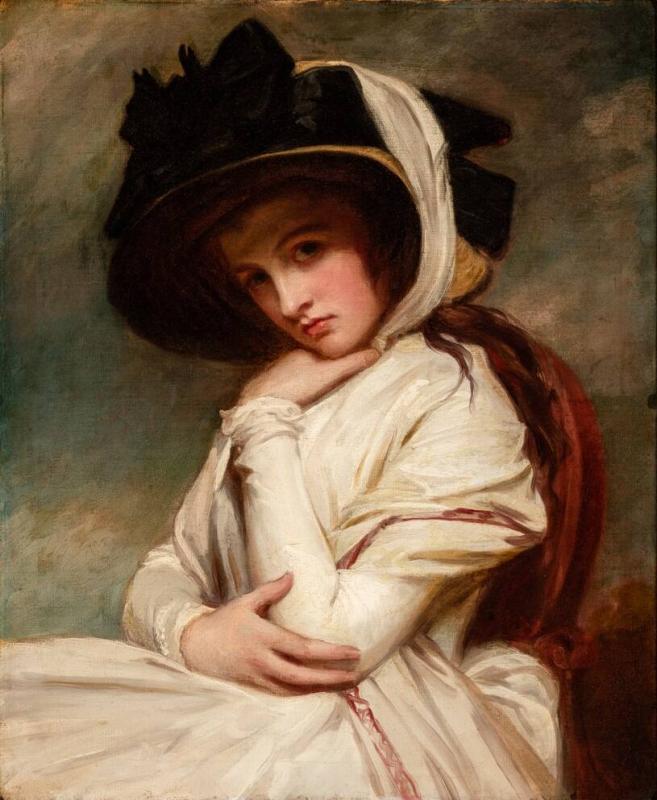
Emma Hamilton as a young woman c. 1782, by George Romney

I was reminded of the local story about Emma Hamilton’s supposed secret confinement somewhere in Southend, which I had read about in Karen Bowman’s book Essex Girls,[1] when I collected some records and memorabilia of Eton House School last month.  The school used to occupy the house called Southchurch Lawn on the road from Thorpe Bay to Great Wakering, which is where it is claimed Emma’s confinement took place.  Apparently, a ship’s surgeon called Seacole was in attendance, and he was persuaded to act as the father at the christening.  Also in attendance, it was said, was a gentleman ‘with an eye patch and an empty sleeve to his jacket’.

Baptisms of Edwin Horatio Hamilton Seacole and Elizabeth Caroline Lind Seacole

Extract from the Prittlewell baptism register, including entries (at the bottom) for Edwin Horatio Hamilton Seacole and Elizabeth Caroline Lind Seacole, September 18th 1803 (D/P 183/1/37)

Looking at the register to verify the entry myself, I found a baptism that took place on 18th September 1803 for two children, a boy christened Edwin Horatio Hamilton Seacole followed by a girl christened Elizabeth Caroline Lind Seacole, the son and daughter of a Thomas and Anne Seacole.  If these were the secret children of Emma Hamilton, and the name of the boy obviously suggests that they might have been, it looks as though she might have had twins.

At the time, Emma would most likely have been staying at the Royal Terrace at Southend, which was in the parish of Prittlewell, as she did on occasion apparently to facilitate liaison with Nelson whenever his ship was moored at The Nore.  In 1805, Emma gave a ball in Nelson’s honour at the assembly room, Southend, which was reported in the Chelmsford Chronicle, Friday August 2nd.  Of course, at the same time, possibly in 1803 or 1804, Caroline the Princess of Wales stayed at the ‘Royal Terrace’ which was named after her, and two years before, her daughter Princess Charlotte stayed for three months at Southchurch Lawn in 1801 for health reasons.

The boy, however, is even more interesting for his connection to another remarkable woman.  Later, he went to Jamaica and married a Jamaican woman of mixed race, Mary Jane Grant, who was to become the celebrated ‘black nurse’ of the Crimean War, Mary Seacole, voted the ‘greatest black Briton’ in a poll in 2004 as reported by BBC News.[2]  ‘Mother Seacole’, as she was affectionately known to many soldiers at the time, ran the ‘British Hotel’ at Spring Hill near Balaclava, which she established in March 1855 to provide what she herself described in her autobiography[3] as ‘a mess-table and comfortable quarters for sick and convalescent officers’.  She also helped wounded soldiers on the battlefield and witnessed the fall of Sevastopol.

The only known photograph of Mary Seacole, taken for a carte de visite by Maull & Company in London (c. 1873)

Later, in her will, she claimed that her husband was Nelson’s ‘godson’ who gave him a diamond ring which Mary kept until the end of her life, even though she fell on hard times after the Crimea, and bequeathed to one of her supporters, Count Gleichen.[4]  In which case, one wonders whether Nelson also attended the christening at St Mary’s himself.

At the time, Mary Seacole’s celebrity rivalled Florence Nightingale’s but she soon fell into obscurity, that is, until recently.  Although many have pointed out that she was never a ‘nurse’ in the sense that Florence Nightingale undoubtedly was, members from The Royal College of Nursing attended the dedication in July 2014 of the site in front of St Thomas’s Hospital where a memorial statue is to be erected to her, due for completion this summer (2015).

The register will be on display in the ERO Searchroom throughout August.

[1] Bowman, Karen (2010). Essex girls. Stroud: Amberley Publishing.

[3] The wonderful adventures of Mrs Seacole in many lands, which has since become a Penguin Classic.

[4] Sara Salih, the editor of the Penguin Classics edition of Mary Seacole’s autobiography, as well as citing the will in her introduction, also refers to surviving records for her marriage to Edwin Seacole in Jamaica and the entry for Edwin Seacole’s baptism in the this register.

Boston trip: another document is coming with us!

Following yesterday’s post we are pleased to be able to share the news that we have got further permission to be able to bring an original parish register with us on our trip to Boston in August 2015.

D/P 192/1/1 is the first parish register of Saffron Walden, with baptism, marriage and burial entries dating from 1558-1630, and therefore contains entries for a number of early American settlers and their families.

Map of Saffron Walden, 1758, by Edward John Eyre (D/B2 MAN7/3

Map of Saffron Walden, 1758, by Edward John Eyre (D/B2 MAN7/3

Several early settlers have been traced to Saffron Walden, such as Samuel Bass who moved to Roxbury, Massachusetts, in 1633, Thomas Cornell who went to Boston, Massachusetts in 1638, and Nicholas Desborough, who by 1637 was in Hartford, Connecticut.

The register is a beautiful early-modern book, long and thin, constructed of wooden boards with a soft leather cover.

The register will be on display with two original wills at our events in Boston, details of which are here.

IMG_7310

The first parish register of Saffron Walden – you can see its wooden covers just poking through the leather in the top left corner

IMG_7313

Soft leather wraps around the wooden covers of the book

IMG_7318

A glimpse inside the register

Boston trip: some documents are coming with us

We have even more exciting news about our Boston trip – we will be taking some original documents with us.

Two historic wills will be making the trip across the Atlantic for visitors to our events in Boston to come and see, one made by Richard Knight in 1703 and the other by Richard Fitzsymonds in 1663.

Knight was an innkeeper from Rochford. His will (D/AEW 30/7) was made on 3 January 1703 and he died a few days later (he was buried in Rochford churchyard on 15 January).

Burial of Richard Knight, 15 January 1703 in Rochford (D/P 129/1/1 image 27)

Burial of Richard Knight, 15 January 1703 in Rochford (D/P 129/1/1 image 27)

He was a prosperous man, and left his mother Love Wood a hundred pounds and three houses for life.

These houses – and two more in Moulsham, Chelmsford – were to pass after his mother’s death to his brother George Knight of ‘Herford in New England’, the place now known as Hartford, Connecticut.

Extract from Richard Knight's will, leaving his brother George Knight in Connecticut five houses, and his brother John Wood 1 shilling (D/AEW 30/7)

Extract from Richard Knight’s will, leaving his brother George Knight in Connecticut five houses, and his brother John Wood 1 shilling (D/AEW 30/7)

Court records show that the will was contested by Richard’s half-brother John Wood, who had been left just one shilling (5p.). Trouble was brewing even before Richard’s death. On 9 January, under pressure from Wood, the executor gathered together three extra witnesses, led by a local gentleman, Thomas Wheeler. Asked whether he was willing to have the will read over to him, the dying man replied ‘noe it is well enough’. Later he allowed Wheeler to break open the sealed will and to read its contents – but only after John Wood’s wife had left the room. Richard then confirmed his original intentions, ‘putting his forefinger upon the marke by him before made’, and the three new witnesses signed the will as it was re-sealed.

Sadly we do not have the Woods’ side of the story, but the court of probate found for the will as written. Whether George in Connecticut ever got his houses remains to be discovered.

The other will is of Richard Fitzsymonds of Great Yeldham, gentleman (D/AMW 9/1).  He made his will in 1663 but did not die until 1680, which is an unusually long gap between a will being made and the testator’s death. The will has a particularly fulsome religious preamble and includes bequests to the poor of three parishes where he owned property.

Will of Richard Fitzsymonds 1663

The detailed religious preamble to the will of Richard Fitzsymonds and bequests to the local poor (D/AMW 9/1)

He also leaves a bequest to his brother and those of his nephews and nieces who were born in England and went out to New England with their father.  He mentions a number of other brothers, nephews, nieces and kinsmen and leaves money for them all to have a gold ring worth twenty shillings.

Extract from the will of Richard Fitzsymonds, 1663, leaving property to his brother Samuel Symonds and his nieces and nephews in New England

Extract from the will of Richard Fitzsymonds, 1663, leaving property to his brother Samuel Symonds and his nieces and nephews in New England


The family was clearly wealthy and had lands in several parishes and two seal rings.  He also asks for a jewel to be purchased for his daughter in law as a token of his love for her.

If you’re in the Boston area next week (3-7 August 2015), do pop in to see ERO staff and these original documents at one of the locations they will be going to – all the details are here.

Both of these wills, along with 70,000 others, are available to view online on our subscription service Essex Ancestors.

Essex-American connections: Thomas Hooker (1586-1647)

In the run up to ERO’s trip to Boston, we take a look at the life of Thomas Hooker, Chelmsford’s town lecturer who went on to become one of America’s founding fathers.

Thomas Hooker (1586-1647) spent the years c.1625-1631 in Chelmsford as the town’s lecturer, drawing large crowds to his sermons. In 1633, along with his wife and children, he made the perilous voyage from England to New England. He went on to become one of the most important men in the new world and is well known in America today, as a co-founder of the state of Connecticut, and the ‘Father of American democracy’, yet he is little known in the country of his birth.

Hooker was born in Leicestershire and studied at Cambridge, as part of a circle including several future Puritans. Puritans were extreme Protestants who were unhappy with what they saw as Catholic elements in the structure and style of worship in the Church of England.

Chelmsford

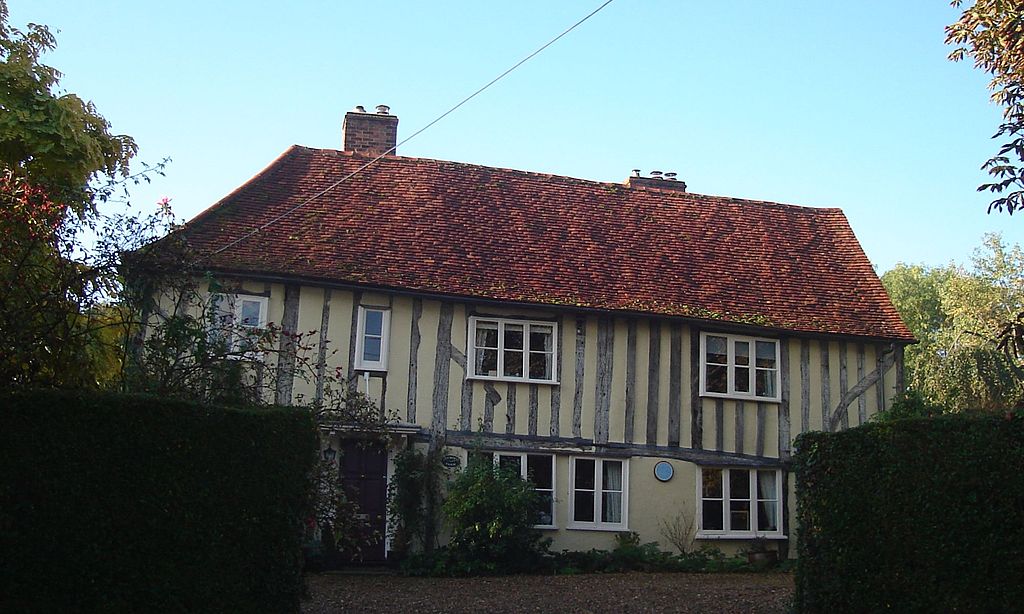
In about 1625 Hooker and his wife Susannah moved with their young family (at least one daughter, Joanna, and possibly their second daughter Mary) to Chelmsford, where Hooker had been appointed as town lecturer. The couple had four more children while living in Chelmsford, two of whom died in infancy and whose baptisms and burials are recorded in the local parish registers. The family lived at Cuckoos in Little Baddow just outside Chelmsford, a farmhouse which is still standing today.

Ann Hooker baptism Great Baddow 1626

‘Ann the daughter of Thomas Hooker and Susan his wyff was baptised’, January 1626, Great Baddow (D/P 65/1/1, image 28)

Ann Hooker burial Chelmsford 1626

Burial record for ‘Ann the daughter of Mr Thomas Hooker of Baddow Minister and of Susan his wife’ from the Chelmsford parish register, 23 May 1626 (D/P 94/1/2, image 90). She would have been about 5 months old.

Sarah Hooker baptism Chelmsford 1628

Baptism of Sarah Hooker, 9 April 1628, Chelmsford (D/P 94/1/2, image 95)

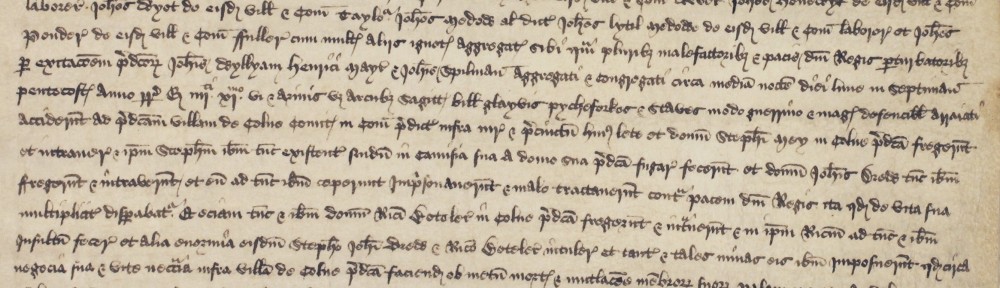
Burial of Sarah Hooker, 26 August 1629, Chelmsford (D/P 94/1/2, image 99). She would have been about 16 months old.
Burial of Sarah Hooker, 26 August 1629, Chelmsford (D/P 94/1/2, image 99). She would have been about 16 months old.

Cuckoos Farm Little Baddow home of Thomas Hooker

Cuckoos farm house, Little Baddow, home to the Hooker family during their time in Chelmsford (Photo: Peter Kirk)

Hooker’s duties in Chelmsford included two lectures a week, which people came from miles around to hear, including from the great families of Essex such as the Earl of Warwick who had a house in Great Waltham, near Chelmsford. Many of the people who came to listen to Hooker also made the journey to New England themselves, meeting him there again, becoming known as ‘Mr Hooker’s Company’.

Hooker spoke against some of the doctrines of the Church of England and the way it was organised, believing it was too close to Roman Catholicism.

Puritans did not seek just reform within the church, but also moral reform within society. The Chelmsford in which Hooker lived had a population of about 1,000, and more than its fair share of ale houses. Drunkenness was a particular focus of the Puritans. According to Magnalia Christi Americana: or, the Ecclesiastical History of New England (published in 1820 in Hartford, Connecticut):

‘there was more profaneness than devotion in the town and the multitude of inns and shops… produced one particular disorder, of people filling the streets with unseasonable behaviour after the public services of the Lord’s Day were over. But by the power of his [Hooker’s] ministry in public, and by the prudence of his carriage in private, he quickly cleared the streets of this disorder, and the Sabbath came to be very visibly sanctified among the people.’

Since this was written some 200 years later in the state where Hooker became a hero this needs to be treated with some caution, but gives an insight into views on Hooker over the centuries.

Bishop Laud and Hooker’s flight to Holland
William Laud

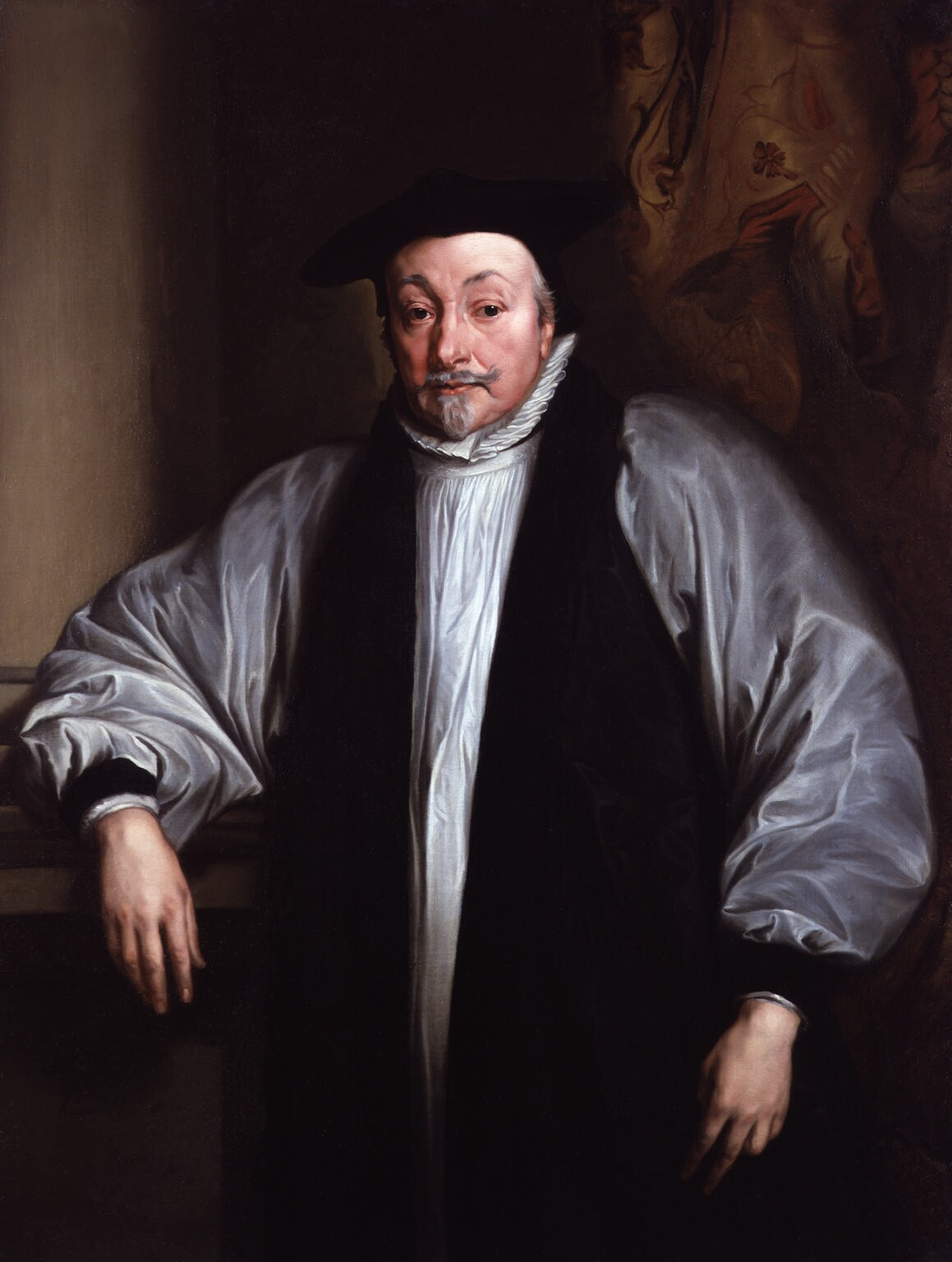
William Laud, Bishop of London from 1628 and Archbishop of Canterbury from 1633

During Hooker’s time in Chelmsford, in July 1628 William Laud was appointed Bishop of London (he would go on to become Archbishop of Canterbury in 1633). Essex was still part of the Diocese of London, and Laud set about weeding out Puritan clergy.

Hooker’s reputation was spread and he was widely known to attract large crowds to his Puritan sermons. Hooker was called before the Court of High Commission in London and dismissed from his Chelmsford job. Withdrew to Little Baddow and set up a school in his house, but did still preach at St Mary’s in Chelmsford, despite the ban.

He was called before the Court of High Commission again, but fled to Holland in spring 1631. Susannah and the children were taken in by the Earl of Warwick in Great Waltham.

Before he left he preached a farewell sermon to the congregation at Chelmsford, which was printed in 1641 as The Danger of Desertion: Or A Farewell Sermon of Mr Thomas Hooker, Sometimes Minister of Gods Word at Chainsford in Essex; but now of New England. Preached immediately before his departure out of Old England. He had a warning for his listeners: “Shall I tell you what God told me? Nay, I must tell you on pain of my life. God has told me this night that he will destroy England.”

New England

After two years of separation, Thomas Susannah and their four surviving children set sail for New England on 10 July 1633 on the Griffin.

About 200 passengers were on board, including other influential men who would play their part in shaping the new world. The voyage was part of what became known as the Great Migration of 1629-40, during which about 20,000 people left England for America, mostly to seek freedom to practice their religion.

The Hookers first went to Newtown (now Cambridge) just outside Boston, where they were joined by several people described as ‘Mr Hooker’s Company’, whom they had known in Essex. Hooker was ordained as the pastor of the congregation on 11 October 1633. In 1636 the decision was made to move again and establish another Newtown (which was to become Hartford) in the Connecticut river valley.

As the English colonies proliferated (despite the presence of Native Americans and Dutch and French settlers) questions of government were under constant discussion, and Thomas Hooker played an active part.

A sermon by Hooker in which he declared that “The foundation of authority is laid in the free consent of the people” is widely credited as the inspiration behind the Fundamental Orders of Connecticut of January 1639, which in turn is seen as an important precursor to the current US Constitution.

Thomas Hooker died on 7 July 1647, 14 years after his arrival in New England. John Winthrop, Governor of Massachusetts and leader of the Winthrop Fleet which had sailed over in 1630, wrote after Hooker’s death that:

‘Mr Hooker who for piety, prudence, wisdom, zeal, learning, and what else might make him serviceable – might be compared with men of the greatest note – and he shall need no other praise.’

Thomas Hooker plaque Chelmsford

Plaque commemorating Thomas Hooker’s life in Chelmsford, on entrance alleyway to Chelmsford Cathedral

If you would like to know more about Thomas Hooker, Deryck Collingwood’s very detailed study Father of American Democracy: Thomas Hooker, 1586-1647 is available in the ERO library. You could also see Hubert Ray Pellman’s thesis Thomas Hooker: A Study in Puritan Ideals, which is catalogued as T/Z 561/35/1.

For an introduction to the Essex contribution to the early days of America, try John Smith’s Pilgrims and Adventurers: Essex (England) and the making of the United States of America, which is available in the ERO library, and also available to purchase from the Searchroom or by calling 033301 32500.
ERO goes to Boston!

We have a very exciting announcement today – two ERO staff members will be crossing the pond in the summer for a flying visit to Boston, to introduce the delights of the ERO to an American audience.

Allyson and Neil

Allyson Lewis, Archivist, and Neil Wiffen, Public Service Team Manager, have over 25 years of ERO experience between them, and have a packed schedule of talks and events for their 5 day trip. You can find out more about this ERO dream team below.

This is where they will be – if you are in the area do pop in to see them! Drop in to hear them speak on how to access and use ERO records through our online service Essex Ancestors, and for the opportunity to ask them questions about researching your Essex ancestors.

Monday 3 August, 9.30-4.30 Tracing Your English Ancestors from Essex – event with the New England Historical and Genealogical Society, 99-101 Newbury Street, Boston, MA.All the details can be found hereNEHGS was established in 1845 and is a leading resource for genealogists. Its library and archive houses over 28 million items dating back over hundreds of years.
Tuesday 4 August Neil and Allyson will be speaking at the National Archives in Boston at 1.00pm, and running a family history helpdesk from 2.00pm-.004pm 380 Trapelo Road, Waltham, MA 02452Toll Free: 866-406-2379www.archives.gov/northeastThe National Archives at Boston is part of the National Archives and Records Administration (NARA), which has several locations across the USA. The NARA facility in Boston stores approximately 30,000 cubic feet of original records, which date back to 1789.
Wednesday 5 August Neil and Allyson will be at Boston Public Library with a presentation at 2.00pm and helpdesk until 4.00pmBoston Public Library, 700 Boylston Street, Boston, MA, 02116617-859-2261
Thursday 6 August Neil and Allyson will be at Boston City Archives to introduce the staff to Essex AncestorsArchives and Records Management Division, 201 Rivermoor Street, West Roxbury,  MA 02132, 617-635-1195; FAX: 617-635-1194

You can explore images and documents from the Boston City Archives collections here: http://cityofbostonarchives.tumblr.com

Friday 7 August Neil and Allyson will be at the Joseph P. Healey Library at The University of Massachusetts at Boston from 10.00am-12.00noon – more details here

For further information including booking please get in touch with the individual venues. Neil and Allyson look forward to meeting you!

A bit more about Allyson and Neil…

Allyson Lewis is an archivist with 30 years’ experience.  She is a graduate of Balliol College, Oxford where she read Modern History.  She then took a Masters in Archive Administration at University College London.  She has worked at Essex Record Office for 12 years and has responsibility for providing Access Points around the county to bring the Record Office closer to the public. She has focussed on researching First World War ancestry as part of the commemorations of the First World War in 2014.  Allyson was born in Liverpool but her family come from all parts of the UK and mainly lead back to the Shetland Islands.

Neil Wiffen, Public Service Team Manager of the Essex Record Office, was born in and educated in Chelmsford before undertaking his first degree at the University of East Anglia in Norwich. He started working at the ERO in 2000 when the new building was opened. At the University of Essex he completed an MA in Local and Regional History and has a strong interest in the history of the county of Essex sparked off mainly by his Dad telling him tales of watching American bombers taking off from the nearby Boreham Aerodrome. His Wiffen ancestors can be traced back to the Halstead area of Essex to at least 1800 but he is waiting to retire before undertaking his family history proper.

Discovering Sister Kate Luard’s story at the Essex Record Office

We have been taking part in Now the Last Poppy has Fallen, a project investigating stories of Essex people and places during the First World War, funded by the Heritage Lottery Fund.

As part of our involvement in the project, we have worked with year 8 students at Shenfield High School to create this short reflective film on the wartime experiences of Sister Kate Luard, who we have mentioned a couple of times on this blog before (here and here).

The students joined us for a day to see Kate’s original letters and papers, and to work with filmmaker Chris Church to tell part of her story.

We will shortly be launching a resource pack using several of our First World War sources for secondary schools; if you would like to register your interest in this please get in touch on ero.events@essex.gov.uk

We had a great day making the film, and we hope you enjoy watching it. See below for some behind-the-scenes photos of the filming process.

IMG_6617 IMG_6622 IMG_6623IMG_6626 IMG_6629 IMG_6630 IMG_6659 IMG_6662 IMG_6670 IMG_6679 IMG_6681IMG_6691 IMG_6693 IMG_6696 IMG_6697 IMG_6704

Document of the month, July 2015: The heat of summer

Each month one of our Archivists selects a document to highlight. This month it is the turn of Chris Lambert – his chosen document will be on display in the ERO Searchroom throughout July 2015.

It was July 1615.  Joan, Lady Barrington, of Hatfield Broad Oak was unwell, and she sought medical advice.  That advice, from Dr Duke of Colchester, survives amongst the Barrington family papers in the ERO (D/DBa F40/1).

D-DBa F40-1 watermarked

The advice of Dr Duke of Colchester to Lady Barrington of Hatfield Broad Oak, July 1615 (D/DBa F40/1)

Reassuringly, Duke did not believe ‘that the swelling of her legges shold be an effect of a dropsy’ (what might now be understood as heart disease).  Lady Barrington’s urine suggested to Duke ‘only much melancholy’.  The effects of melancholy were extensive, including ‘windiness of stomacke & body, flushing heates, [and] causeless feares’, but Duke did not think them dangerous.

Beyond that, Lady Barrington was ‘of a good complexion, well coulered & eateth her meat well, having a full body’.  For Duke, this was evidence that the swelling was simply ‘an effect of watery humours in the veynes, wherewith Nature being burthened, she doth expell & abandon them to the inferiour partes’.  The condition appeared in summer because Lady Barrington ‘eateth & drinketh liberally although the naturall heat of the stomacke be now much lesse then in winter, as also because the passages of the body are more open in sommer … and so the humours do with more facilitye flowe into those partes’.  The ancient Greek doctrine of the four bodily humours, associated with the four seasons, still ruled 17th-century medicine.  In 1615, William Harvey’s revolutionary discovery of the circulation of the blood still lay 13 years in the future.

D-DQ 14-191 watermarked

Hatfield Broad Oak, seen in a contemporary map (D/DQ 14/191). Lady Barrington’s home at the Priory House appears just above the church.

Duke’s prescription was a moderate purge, the ‘often use of turpentine of Cipres [Cyprus]’, and frequent ‘astringent bathes’ for the patient’s legs.  But ‘at the fall of the leafe, it wer necessary to take some more forcible purging physicke’.  The humours of the body being un-balanced, purging would restore them.  Perhaps it did: Lady Barrington lived on until 1641.