Essex-American connections: Thomas Hooker (1586-1647)

In the run up to ERO’s trip to Boston, we take a look at the life of Thomas Hooker, Chelmsford’s town lecturer who went on to become one of America’s founding fathers.

Thomas Hooker (1586-1647) spent the years c.1625-1631 in Chelmsford as the town’s lecturer, drawing large crowds to his sermons. In 1633, along with his wife and children, he made the perilous voyage from England to New England. He went on to become one of the most important men in the new world and is well known in America today, as a co-founder of the state of Connecticut, and the ‘Father of American democracy’, yet he is little known in the country of his birth.

Hooker was born in Leicestershire and studied at Cambridge, as part of a circle including several future Puritans. Puritans were extreme Protestants who were unhappy with what they saw as Catholic elements in the structure and style of worship in the Church of England.

Chelmsford

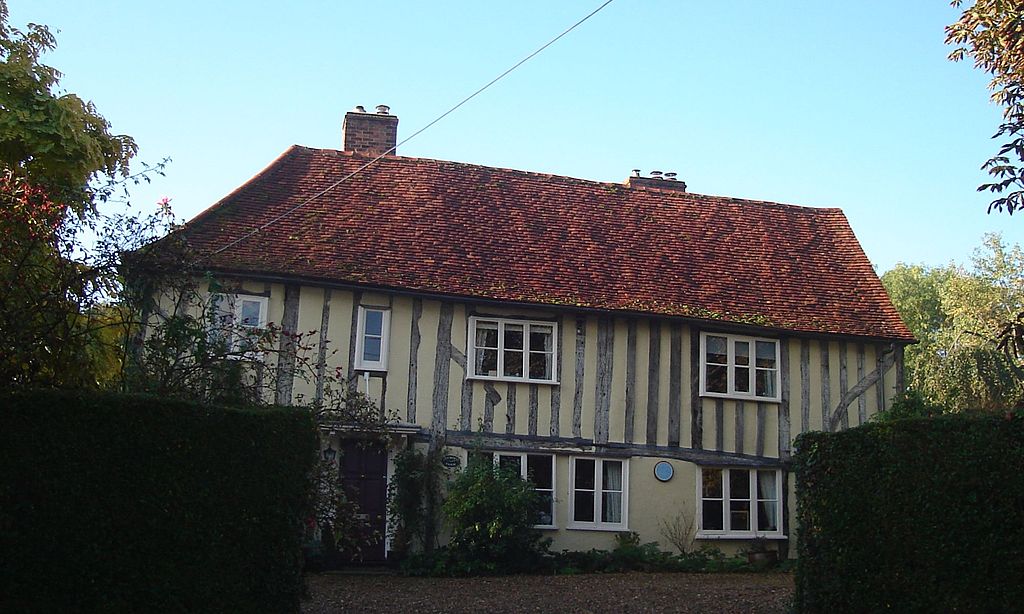
In about 1625 Hooker and his wife Susannah moved with their young family (at least one daughter, Joanna, and possibly their second daughter Mary) to Chelmsford, where Hooker had been appointed as town lecturer. The couple had four more children while living in Chelmsford, two of whom died in infancy and whose baptisms and burials are recorded in the local parish registers. The family lived at Cuckoos in Little Baddow just outside Chelmsford, a farmhouse which is still standing today.

Ann Hooker baptism Great Baddow 1626

‘Ann the daughter of Thomas Hooker and Susan his wyff was baptised’, January 1626, Great Baddow (D/P 65/1/1, image 28)

Ann Hooker burial Chelmsford 1626

Burial record for ‘Ann the daughter of Mr Thomas Hooker of Baddow Minister and of Susan his wife’ from the Chelmsford parish register, 23 May 1626 (D/P 94/1/2, image 90). She would have been about 5 months old.

Sarah Hooker baptism Chelmsford 1628

Baptism of Sarah Hooker, 9 April 1628, Chelmsford (D/P 94/1/2, image 95)

Burial of Sarah Hooker, 26 August 1629, Chelmsford (D/P 94/1/2, image 99). She would have been about 16 months old.

Burial of Sarah Hooker, 26 August 1629, Chelmsford (D/P 94/1/2, image 99). She would have been about 16 months old.

Cuckoos Farm Little Baddow home of Thomas Hooker

Cuckoos farm house, Little Baddow, home to the Hooker family during their time in Chelmsford (Photo: Peter Kirk)

Hooker’s duties in Chelmsford included two lectures a week, which people came from miles around to hear, including from the great families of Essex such as the Earl of Warwick who had a house in Great Waltham, near Chelmsford. Many of the people who came to listen to Hooker also made the journey to New England themselves, meeting him there again, becoming known as ‘Mr Hooker’s Company’.

Hooker spoke against some of the doctrines of the Church of England and the way it was organised, believing it was too close to Roman Catholicism.

Puritans did not seek just reform within the church, but also moral reform within society. The Chelmsford in which Hooker lived had a population of about 1,000, and more than its fair share of ale houses. Drunkenness was a particular focus of the Puritans. According to Magnalia Christi Americana: or, the Ecclesiastical History of New England (published in 1820 in Hartford, Connecticut):

‘there was more profaneness than devotion in the town and the multitude of inns and shops… produced one particular disorder, of people filling the streets with unseasonable behaviour after the public services of the Lord’s Day were over. But by the power of his [Hooker’s] ministry in public, and by the prudence of his carriage in private, he quickly cleared the streets of this disorder, and the Sabbath came to be very visibly sanctified among the people.’

Since this was written some 200 years later in the state where Hooker became a hero this needs to be treated with some caution, but gives an insight into views on Hooker over the centuries.

Bishop Laud and Hooker’s flight to Holland

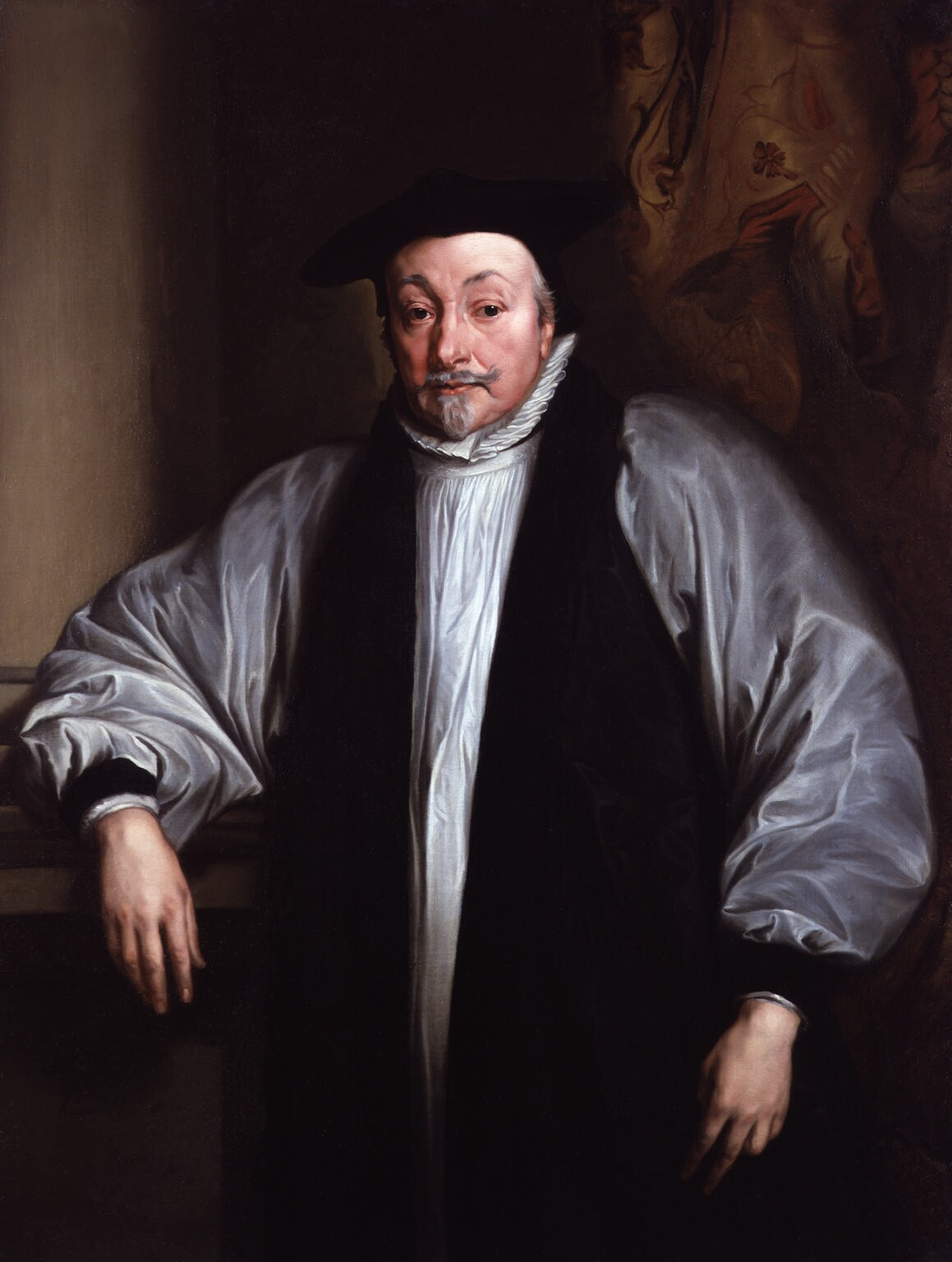
William Laud

William Laud, Bishop of London from 1628 and Archbishop of Canterbury from 1633

During Hooker’s time in Chelmsford, in July 1628 William Laud was appointed Bishop of London (he would go on to become Archbishop of Canterbury in 1633). Essex was still part of the Diocese of London, and Laud set about weeding out Puritan clergy.

Hooker’s reputation was spread and he was widely known to attract large crowds to his Puritan sermons. Hooker was called before the Court of High Commission in London and dismissed from his Chelmsford job. Withdrew to Little Baddow and set up a school in his house, but did still preach at St Mary’s in Chelmsford, despite the ban.

He was called before the Court of High Commission again, but fled to Holland in spring 1631. Susannah and the children were taken in by the Earl of Warwick in Great Waltham.

Before he left he preached a farewell sermon to the congregation at Chelmsford, which was printed in 1641 as The Danger of Desertion: Or A Farewell Sermon of Mr Thomas Hooker, Sometimes Minister of Gods Word at Chainsford in Essex; but now of New England. Preached immediately before his departure out of Old England. He had a warning for his listeners: “Shall I tell you what God told me? Nay, I must tell you on pain of my life. God has told me this night that he will destroy England.”

New England

After two years of separation, Thomas Susannah and their four surviving children set sail for New England on 10 July 1633 on the Griffin.

About 200 passengers were on board, including other influential men who would play their part in shaping the new world. The voyage was part of what became known as the Great Migration of 1629-40, during which about 20,000 people left England for America, mostly to seek freedom to practice their religion.

The Hookers first went to Newtown (now Cambridge) just outside Boston, where they were joined by several people described as ‘Mr Hooker’s Company’, whom they had known in Essex. Hooker was ordained as the pastor of the congregation on 11 October 1633. In 1636 the decision was made to move again and establish another Newtown (which was to become Hartford) in the Connecticut river valley.

As the English colonies proliferated (despite the presence of Native Americans and Dutch and French settlers) questions of government were under constant discussion, and Thomas Hooker played an active part.

A sermon by Hooker in which he declared that “The foundation of authority is laid in the free consent of the people” is widely credited as the inspiration behind the Fundamental Orders of Connecticut of January 1639, which in turn is seen as an important precursor to the current US Constitution.

Thomas Hooker died on 7 July 1647, 14 years after his arrival in New England. John Winthrop, Governor of Massachusetts and leader of the Winthrop Fleet which had sailed over in 1630, wrote after Hooker’s death that:

‘Mr Hooker who for piety, prudence, wisdom, zeal, learning, and what else might make him serviceable – might be compared with men of the greatest note – and he shall need no other praise.’

Thomas Hooker plaque Chelmsford

Plaque commemorating Thomas Hooker’s life in Chelmsford, on entrance alleyway to Chelmsford Cathedral

If you would like to know more about Thomas Hooker, Deryck Collingwood’s very detailed study Father of American Democracy: Thomas Hooker, 1586-1647 is available in the ERO library. You could also see Hubert Ray Pellman’s thesis Thomas Hooker: A Study in Puritan Ideals, which is catalogued as T/Z 561/35/1.

For an introduction to the Essex contribution to the early days of America, try John Smith’s Pilgrims and Adventurers: Essex (England) and the making of the United States of America, which is available in the ERO library, and also available to purchase from the Searchroom or by calling 033301 32500.

Discovering Sister Kate Luard’s story at the Essex Record Office

We have been taking part in Now the Last Poppy has Fallen, a project investigating stories of Essex people and places during the First World War, funded by the Heritage Lottery Fund.

As part of our involvement in the project, we have worked with year 8 students at Shenfield High School to create this short reflective film on the wartime experiences of Sister Kate Luard, who we have mentioned a couple of times on this blog before (here and here).

The students joined us for a day to see Kate’s original letters and papers, and to work with filmmaker Chris Church to tell part of her story.

We will shortly be launching a resource pack using several of our First World War sources for secondary schools; if you would like to register your interest in this please get in touch on ero.events@essex.gov.uk

We had a great day making the film, and we hope you enjoy watching it. See below for some behind-the-scenes photos of the filming process.

IMG_6617 IMG_6622 IMG_6623IMG_6626 IMG_6629 IMG_6630 IMG_6659 IMG_6662 IMG_6670 IMG_6679 IMG_6681IMG_6691 IMG_6693 IMG_6696 IMG_6697 IMG_6704

Creeksea Church: a hidden Victorian gem

Historic buildings specialist and ERO user Edmund Harris writes for us on a hidden gem of Victoriana in the village of Creeksea. This post draws on the Chancellor collection, made up of some 10,000 building plans from the office of noted Victorian architect Fred Chancellor. We are currently two years into a long-term project to clean, repackage and catalogue every one of these plans; find out more here.

Creeksea (sometimes called Cricksea) is a tiny village now virtually on the western outskirts of Burnham-on-Crouch, with long, tranquil views to the south over the gentle landscape of the Crouch estuary.

DSCN6524

Existing literature on the county is mostly likely to send a lover of antiquities there to look at Creeksea Place, a fragment of a once much larger Elizabethan house, possibly also Creeksea Hall and a half-timbered cottage.

But anyone other than the most steadfastly curious of enthusiasts for Victoriana might well be put off investigating the parish church of All Saints by mentions of a complete rebuild in 1878; Essex has several nationally important and much celebrated 19th century churches but this is not generally recognised as one of them. That would, however, be a great shame, as All Saints is actually a most remarkable building that handsomely repays closer examination.

DSCN6457

It is indeed almost entirely a rebuild by Frederic Chancellor, but the evolution of his design is far more complicated than one might expect. A splendid set of several dozen drawings in the ERO details an intriguing design process.

We know what the predecessor of the present church looked like thanks to a plan and elevations from Chancellor’s office dated January 1877, which show a simple, modest two-cell building, clearly much patched and mended in a rather ad hoc fashion over the years (witness the trusses bridging the buttresses to the west wall on which the bellcote is supported), evidently seated internally with box pews.

The old church

The old church – click for larger version

Today we should say that this gave it charm of as great a value as its antiquity – the round-arched north door suggests Norman origins – but to the Victorian mind such a building would have appeared so badly degraded as to be of minimal interest. It would have suggested a Church of England in decline and looked wanting in pride and propriety. The building would have been unsuited to Victorian liturgical practice and features such as the oblong, probably Elizabethan east window would probably have been viewed as downright inappropriate for a religious building.

But Chancellor’s involvement with All Saints in fact seems to have begun well over a year previously. An artist’s impression dated 4th August 1875, shows the interior of what is called ‘a proposed new church’ in a very plain lancet style – decent, but clearly the work of an architect confined by a limited budget. It looks like it might have been intended for publication and may have been no more than a concept sketch.

First scheme of 1875

An artist’s impression dated 4th August 1875, showing the interior of ‘a proposed new church’

Only one drawing on file gives any more information about it: a view of the south elevation (executed in pencil rather than pen and wash) shows something that is clearly a precursor of what was eventually built but far plainer. Features such as the paired lancets to the side wall of the nave give it very clear affinities with another, this time undated proposal.

Unlike the August 1875 scheme it was aimed at rebuilding just the nave, but this time was pursued as far as a set of contract-standard drawings. Externally the rebuilt nave appears rather forbidding and Chancellor initially struggled to make a virtue of the building’s simplicity. It looks as though it was probably meant to be rendered with only the stone quoins left visible. While instantly recognisable as a product of the High Victorian movement, the building lacks any sort of sense of local character. Which of these schemes came first is a mystery. Perhaps initial plans for a complete rebuild had to be scaled back to replacing just the nave when it became apparent the cost would be excessive, but that is conjecture.

Undated nave rebuild from S

Undated proposal to rebuild the nave – south elevation

What happened next is not clear, but it is a reasonable bet that finances outstripped by the parish’s ambitions put a check on progress since in December 1876 and January 1877 designs emerged from Chancellor’s office for a restoration of the medieval building. ‘Restoration’ was, as so often the case at this time, something of a euphemism. In fact it was nothing less than a comprehensive remodelling since the building was to be refenestrated throughout, the bellcote and roof replaced, the interior refurnished, a new porch added on the south side and a vestry built onto the north wall of the chancel. Probably the pattern of events that led to this was nothing more than an accident, but if so it was a happy one since it seems to have forced Chancellor to take a closer look at the existing building and its character. Picturesque touches such as the partly timbered chancel and vestry gables now appear and generally there is greater care and finesse in the detailing than in the first two designs.

1876-7 restoration - S elevation

Plans for restoration scheme, 1876/6 – south elevation

Perhaps the condition of the existing fabric turned out to be too poor to withstand such substantial new additions. Or perhaps the cost was only marginally less than a complete rebuild and the parish, taking a long-term view, felt that on balance an entirely new building represented much better value for money. Perhaps even a generous sponsor appeared. Without further research neither hypothesis can be corroborated, but the restoration project was not entertained for long and between February and June 1877 Chancellor produced drawings for the nave that was eventually built. Like the earlier scheme, it shows the medieval chancel left intact, but that seems to have been a temporary expedient – probably only done so that divine service could continue while the work was carried out – since a further set of drawings dated November 1877 and March 1878 depicts the existing structure that superseded it, completing Chancellor’s new church. Notably, not just the pen and wash contract drawings survive at the ERO, but also detailed working drawings for features such as the bellcote and porch.

1877 chancel - S elevation

Proposed new chancel, 1877 scheme – south elevation

1877 bellcote - detail

Detail of the bell turret from 1877 scheme

So much for the chronology of the design process. Beautiful though these fine examples of Victorian architectural draughtsmanship are, the building that eventually resulted from all these false starts is even lovelier. The contrast with the 1875 initial version of the scheme is striking. The dour lancet style has given way to an ornate, almost fruity Perpendicular Gothic. The lush foliate carving – something shown in a series on file of delicate pencil drawings – that adorns the screen dividing the vestry from the chancel, the large, four-light window on the south side of the nave and the panelled pulpit would not disgrace a far grander building.

DSCN6462

DSCN6496 DSCN6532

But the really memorable thing about the church is the wonderful treatment of the walls. Faced with a lack of good, locally available stone, the builders of Essex’s medieval churches had to press into surface whatever came to hand, from pudding stone to flint to brick from the ruins of Roman Colchester, giving the exteriors of many of them a charming, variegated, patchwork effect. No doubt Chancellor was keen to offset the value of material recovered from the old building against the cost of the construction of its replacement (a fragment of a Norman arch with typical chevron decoration can be seen built into one wall) but he made a real virtue of his economy. This sensitivity to local materials and traditions is remarkable for its date. It would become a major article of faith for leading figures in the Arts and Crafts movement, but not for another decade or so. And while some of those architects were content to let their builders produce the exuberant effects they desired, the drawings show that delightful features such as the striped window heads were Chancellor’s own inspiration.

DSCN6479


DSCN6481

DSCN6487

The long wait, the vagaries of the design process and the choice of an architect with local roots paid off. Frederic Chancellor did right by the parishioners of Creeksea.

Magna Carta: Essex Connections – Roger de Mescinges

In our final blog post in the run up to Magna Carta: Essex Connections on Saturday 23 May, we look at a document that is something of a post-script to our recent Magna Carta, but it is an interesting medieval document we wanted to share.

The document is a grant made by Roger de Mescinges [Messing] of all his lands, knights and other tenements of his fee to his son-in-law Thomas Bainard (D/DH VB11).

There are two key features which make it particularly interesting: first, it is possible to give this a definite date, which is unusual in medieval deeds, and second, it gives us an insight into the mindset of a landowner during the unrest following the granting of the Magna Carta in 1215.

Its date can be narrowed down very precisely, because of the reference it makes to the Treaty of Lambeth, which was agreed on 11 September 1217 between the rebel barons, the new King Henry III, and Prince Louis of France, who agreed to give up his claim to the English crown.

After listing the witnesses, this deed states that it was made in the time ‘when peace was made between the lord Henry, King of England and Louis son of the King of France and between the barons of the king’.

It’s also interesting to read that Roger de Mescinges was giving his land to his son-in-law because his own body was ‘so debilitated’ that it was not possible for him to defend his land, labourers and possessions. Land and with it wealth and possessions were held by those able to physically defend it.  After nearly three years of civil war, with a great deal of fighting taking place in Essex, Roger de Mescinges had decided that a younger man was needed to defend his land.

D-DH VB11 watermarked

Find out more about Essex connections with the Magna Carta with us on Saturday 23 May.

Magna Carta: Essex Connections

To explore the significance and legacy of this famous document, both nationally and for Essex, join us for talks from:

  • Nicholas Vincent, Professor of Medieval History at the University of East Anglia, who has been leading a major project researching the background to Magna Carta
  • Katharine Schofield, ERO Archivist, on Essex connections with Magna Carta and the impact it had on the medieval county

Saturday 23 May, 1.15pm for 1.30am-4.15pm

Tickets: £8, including tea, coffee and cake

Please book in advance on 033301 32500

Magna Carta: Essex Connections – the fighting that followed

In almost our last blog post in the run up to Magna Carta: Essex Connections on Saturday 23 May, we take a look at some of the fighting that occurred in the county as a result of the unrest between King John and the rebel barons in 1215.

Within a few weeks of King John’s meeting with the barons at Runnymede on 19 June 1215 it was evident that Magna Carta had not brought peace. The king started to recruit mercenaries from overseas and the barons in turn refused to surrender London.

The barons went to France and offered the crown to King Philip’s son Louis. At the end of November Prince Louis sent a small army to help the barons; they landed in the Orwell estuary and marched on London

King John divided his force into two, setting off north with part of his force. The chronicler Roger of Wendover described the king’s campaign in the north:

The whole land was covered with these limbs of the devil like locusts, who assembled to blot out every thing from the face of the earth: for, running about with drawn swords and knives, they ransacked towns, houses, cemeteries, and churches, robbing everyone, sparing neither women nor children.

The other part of the forces under Savary de Mauléon (one of the king’s mercenaries) and the Earl of Salisbury (John’s half-brother) headed into Essex.  The chronicler Ralph of Coggeshall described the effect of the royal forces in the county.  By Christmas Eve they were besieging Geoffrey de Mandeville’s castle at Pleshey and from there the royal forces were laying the surrounding countryside to waste, demanding money and men and burning houses, destroying parks and cutting down trees.

On Christmas Day 1215 one of these raiding parties broke into Tilty Abbey during mass, destroying furnishings and breaking open the cellars and carrying away items stored there which had been deposited by merchants.

Tilty Abbey

Watercolour of Tilty Abbey by A.B. Bamford, c.1905 (I/Ba 72/1)

A week later on 1 January Ralph of Coggeshall described how they broke into his own abbey at Coggeshall, and stole 22 horses belonging to the bishop of London, the treasurer, the monks and others.

Savary de Mauléon went on to besiege Colchester Castle in January 1216, retreating to Bury St. Edmunds when he heard that the barons were heading towards Colchester.

Following the conclusion of the king’s campaign in the north, he headed south to Essex. By the end of March both Colchester and Hedingham Castles had surrendered to the king.  In May 1216 Prince Louis landed in England with a larger French force.  In the next few months, three forces ranged through Essex – the army of the king, the barons’ forces led by William de Mandeville, Earl of Essex (brother of the recently dead Geoffrey de Mandeville), Robert FitzWalter and William de Huntingfield (another Magna Carta baron) and a mostly French force, supporting the barons.

Hedingham Castle (I/Mb 176/1/32)

Hedingham Castle (I/Mb 176/1/32)

On 19 October 1216 King John died at Newark. His eldest son Henry III (aged 9) was crowned at Gloucester Cathedral as the barons and Prince Louis still controlled London.  The regent for the king was a much respected baron William Marshal, Earl of Pembroke. Marshal gradually persuaded many of the barons to support the king.  In May 1217 the remaining barons were defeated at the Battle of Lincoln, with many being captured, including Robert FitzWalter, Richard de Mountfitchet and Gilbert de Clare. On 11 September 1217 the Treaty of Lambeth was agreed, with Prince Louis agreeing to give up his claim to the English crown.  As well as settling with the French, the treaty made peace with the barons; Richard de Mountfitchet, for example, not only regained his lands, but also his custody of the forest of Essex.

Find out more about Essex connections with the Magna Carta with us on Saturday 23 May.

Magna Carta: Essex Connections

To explore the significance and legacy of this famous document, both nationally and for Essex, join us for talks from:

  • Nicholas Vincent, Professor of Medieval History at the University of East Anglia, who has been leading a major project researching the background to Magna Carta
  • Katharine Schofield, ERO Archivist, on Essex connections with Magna Carta and the impact it had on the medieval county

Saturday 23 May, 1.15pm for 1.30am-4.15pm

Tickets: £8, including tea, coffee and cake

Please book in advance on 033301 32500

Magna Carta: Essex Connections – the other Essex barons

In our series of posts about the Essex connections with the people involved in the granting of the Magna Carta in 1215, we have previously mentioned that six of the 25 rebel barons named in the document had strong Essex connections.

We have already whisked through the involvement of Geoffrey de Mandeville and Robert FitzWalter, and here we take a quick look at the other four; Robert de Vere, Robert de Mountfitchet, John FitzRobert and William de Lanvallei.

Robert de Vere

Effigy of Robert de Vere, Earl of Oxford, in Hatfield Broad Oak church

Robert de Vere, Earl of Oxford (his effigy in Hatfield Broad Oak church is to the right) and Richard de Mountfitchet could trace their Essex lands back to the Norman Conquest. The de Vere family were based at Castle Hedingham and the Mountfitchets at Stansted. Together with the de Clare and Bigod families they owned extensive lands in the north of the county.

John FitzRobert was lord of the manor of Clavering and related to the Bigod family. He was also lord of Warkworth in Northumberland, and so part of the other significant group of Magna Carta barons described by chroniclers as ‘the Northerners’.

The final Essex baron was William de Lanvallei, constable of Colchester Castle and lord of the manors of Lexden, Stanway, Great Bromley and Great Hallingbury.  He also held lands in Hertfordshire.

Many of the barons benefited directly from their involvement.  Within a few days of Magna Carta, the king granted Hertford Castle to Robert FitzWalter; William de Lanvallei became constable of Colchester Castle again; Richard de Clare gained the town of Buckingham; and Richard de Montfitchet was appointed forester of Essex, a title held by his father and grandfather (more on this here).

Find out more about Essex connections with the Magna Carta with us on Saturday 23 May.

Magna Carta: Essex Connections

To explore the significance and legacy of this famous document, both nationally and for Essex, join us for talks from:

  • Nicholas Vincent, Professor of Medieval History at the University of East Anglia, who has been leading a major project researching the background to Magna Carta
  • Katharine Schofield, ERO Archivist, on Essex connections with Magna Carta and the impact it had on the medieval county

Saturday 23 May, 1.15pm for 1.30am-4.15pm

Tickets: £8, including tea, coffee and cake

Please book in advance on 033301 32500

Magna Carta: Essex Connections – Robert FitzWalter

In our series of posts about the Essex connections with the people involved in the granting of the Magna Carta in 1215, we have previously mentioned that six of the 25 rebel barons named in the document had strong Essex connections.

One of these men was Robert FitzWalter, lord of Little Dunmow, who was generally seen as one of the leaders of the barons against the king.

He and another Magna Carta baron, Eustace de Vesci had been implicated in a plot against the king in 1212 and fled to France, before later being reconciled and returning to England. During the rebellion against the king he described himself as ‘Marshal of the Army of God’.

FitzWalter alleged that John had attempted to rape his daughter Matilda and following her resistance had seized Matilda and imprisoned her in the Tower of London. Matilda continued to resist John so he sent her an egg filled with poison which she ate and died.

One chronicler, Matthew Paris, described FitzWalter’s daughter as Matilda or Maud the Fair called Maid Marion. However, it was not until a 17th century play that the character became associated with the legend of Maid Marion and Robin Hood.

Matilda FitzwalterIt has been suggested that the female FitzWalter effigy in Little Dunmow church (right) marks the burial place of Matilda.

Matilda FitzWalter was in fact the first wife of another Magna Carta baron Geoffrey de Mandeville, Earl of Essex. The de Mandevilles had held extensive lands in Essex since the Norman Conquest of 1066, with castles at Pleshey and Saffron Walden.

Find out more about Robert FitzWalter and other Essex connections with the Magna Carta with us on Saturday 23 May.

Magna Carta: Essex Connections

To explore the significance and legacy of this famous document, both nationally and for Essex, join us for talks from:

  • Nicholas Vincent, Professor of Medieval History at the University of East Anglia, who has been leading a major project researching the background to Magna Carta
  • Katharine Schofield, ERO Archivist, on Essex connections with Magna Carta and the impact it had on the medieval county

Saturday 23 May, 1.15pm for 1.30am-4.15pm

Tickets: £8, including tea, coffee and cake

Please book in advance on 033301 32500

Magna Carta: Essex Connections – 1203 charter and letters patent of King John

Ahead of Magna Carta: Essex Connections on Saturday 23 May, thought we would take a look at two ERO documents from the reign of the infamous King John (1199-1216).

These two documents are featured on the University of East Anglia’s Magna Carta Project website which brings together all of the charters of King John’s reign.  Professor Nicholas Vincent, an expert on Magna Carta, leads this project and he will be speaking about Magna Carta at the Essex Record Office’s mini conference on 23 May.

King John issued several thousand charters during his reign. The Magna Carta Project site explains that:

‘The word ‘charter’ covers a multitude of possibilities, but in essence defines a single sheet of parchment on which were recorded commands, requests or most often grants by one party to another… [charters] are often our best, and sometimes our only means of access to the realities of power, of landholding and of administration.’

The Magna Carta Project has been tracking down all the surviving charters of King John’s reign, which can be found in archives around the country (including here at ERO) and bringing digital versions of them together online

The two ERO documents which have been included in the project date from 1203. One is a charter, and the other a letters patent.

The oldest Essex royal charter in the Record Office was granted by King John on 2 May 1203 (D/DB T1437/1).  The charter confirmed the judgement made by the king’s justiciar Geoffrey FitzPeter (‘fil Petri’ son of Peter) in the royal court (more on him in another post coming soon).  The judgement was that Constance Furre should inherit the lands in Heydon (‘Heyden’) and London of her father Robert Furre, having been judged to be the rightful heir in the court.

D-DT T1437-1

This charter was granted while the king was at ‘Auriualla’, the modern Roche d’Orival near Rouen in Normandy.  At a time when royal justice was only dispensed by the king or his chief officer, and the ability to defend land through military might was essential, the inheritances of women were particularly vulnerable to counter-claims by others.

This document begins in the conventional way:

‘Joh[anne]s d[e]I gr[ati]a Rex Angl[orum] Dominus Hyb[ern]ie, Dux Norm[annie] et Aquit[annie] Com[es] And[egavie] archiepi[scopi]s epi[scopi]s abb[ati]b[u]s com[itibus] bar[onibus] justice[ariis] vic[ecomitibus] prepo[si]tis minist[ri]s et omnib[u]s ball[ivi]s et fidelib[u]s suis sal[u]t[em]’

(John by the Grace of God, King of England, Lord of Ireland, Duke of Normandy and Aquitaine, Count of Anjou to his archbishops, bishops, abbots, earls, barons, justices, sheriffs, reeves, officers and all bailiffs and subjects greetings.)

This is almost identical with the opening of Magna Carta, which included foresters between the justices and the sheriffs.  John was the first English monarch to describe himself as Lord of Ireland, a title he held before he became king.

The Great Seal affixed to the charter confirmed the king’s approval of the contents and would have been used to signify his agreement to Magna Carta.  Seals were made of wax and the royal seal was produced using a double-sided metal mould (matrix).  It is conventional for royal seals to show the monarch seated on one side holding the orb and sceptre, ready to dispense justice which comes down from the crown.  On the other side it is customary to show the monarch on a horse ready to defend the country. The seal here has survived remarkable well considering it is over 800 years old, and it is still possible to make out traces of the royal images impressed into it.

D-DB T1437-1-01 D-DB T1437-1-02

The charter was accompanied by a royal grant by letters patent of 2 April 1203 (D/DB T1437/2).  This document confirms that the lands had been delivered to Constance and in turn she declared (quitclaimed) that she had no further claim to the lands, having been paid 15 marks by Thomas de Heydene (the lord of the manor) when she married.  Constance kept 1 virgate (approximately 30 acres) of land for herself.  A mark was valued at 13s. 4d. and it is estimated that today 13 marks would be worth around £5,000.  These letters patent were given at ‘Mullinell’ (Moulineux) in France.  The green wax on this seal was used because it was a grant by letters patent (open letter).

D-DB T1437-2 watermarked

Two of the men named as witnesses in this document – Geoffrey FitzPeter and Hugh de Neville – both have interesting stories and Essex connections which we will explore in forthcoming posts.

In the meantime, get in touch on 033301 32500 to book your ticket for Magna Carta: Essex Connections.

Magna Carta: Essex Connections

To explore the significance and legacy of this famous document, both nationally and for Essex, join us for talks from:

  • Nicholas Vincent, Professor of Medieval History at the University of East Anglia, who has been leading a major project researching the background to Magna Carta
  • Katharine Schofield, ERO Archivist, on Essex connections with Magna Carta and the impact it had on the medieval county

Saturday 23 May, 1.15pm for 1.30am-4.15pm

Tickets: £8, including tea, coffee and cake

Please book in advance on 033301 32500

Document of the Month, May 2015: 50th anniversary of the five Essex London Boroughs

This month marks the 50th anniversary of the creation of the 5 London Boroughs of Barking & Dagenham, Havering, Redbridge, Newham and Waltham Forest in the metropolitan area of the ancient county of Essex.

To mark this anniversary, we have cheated slightly with Document of the Month and chosen images of those places when they were still part of Essex.

The old Court House or Market Hall or Old Town Hall at Barking was built and paid for by Elizabeth I.  By 1920 it had fallen into disrepair and was demolished in 1923.

IBa 5-41

Dagenham will always be associated with Fords.  This photograph shows Edsel Ford cutting the first sod for the factory c. 1929.

I-Mp 113-1-5

Havering was named for the ancient Royal Liberty of Havering-atte-Bower.  The Round House, Havering was built in 1792 for William Sheldon, a wealthy tea merchant, and was later home to Rev Joseph Pemberton who developed the hybrid musk rose in the 1900s.

I-Mb 173-1-10 watermarked

Newham was formed from the County Boroughs of West Ham and East Ham.  This illustration shows the Old Town Hall at Stratford, built in 1869.

I-Mb 164-1-51

Redbridge was named for a bridge over the River Roding.  Situated in the Borough was the Fairlop Oak, an ancient place for fairs.  Its name continues in the Fairlop Waters Country Park.

I-Mb 194-1-13

Vestry House, Walthamstow is where the Waltham Forest archives are held.  This watercolour is by A. B. Bamford and dates from 1926.

I-Ba 79-5

The expanding Essex electorate

As the 2015 General Election approaches, we take a look at some of the records of voting history in the Essex Record Office archives…

The right to vote is something which we are all today well accustomed to, and perhaps even take for granted. In the 2010 General Election 847,090 people voted in Essex. Not all that long ago, many of these people would have been barred from the polling station.

Turn the clock back 100 years and what we today recognise as a fair electorate would be halved straight away by the exclusion of women. Go back a little further and many men were excluded on the grounds of not owning enough property. Return to 1830, and only about 10% of the adult male population qualified to vote. Essex had a population of about 300,000 people at this time, only about 6,000 of whom could vote.

Although not exactly a scientific comparison the pictures below give you some sense of just how much the electorate expanded during the 19th and early 20th centuries.

This first, slender volume from 1833-34 is one of the earliest electoral registers held at the ERO. There were so few voters at this time that they are all listed in just two volumes this size, one for the northern part of the county and one for the south.

IMG_6226

By the time the super-sized registers for the Walthamstow Division pictures below were created in 1914 and 1915 most men had the vote, but women were still excluded. The population in metropolitan Essex had increased considerably in this time, but even taking this into account the difference in the size of the books and the changes this represent in voting qualifications are remarkable.

IMG_6214

Today Essex elects 18 MPs but in the 1700s and 1800s there were only four places in Essex where polling could take place for parliamentary elections – the Boroughs of Maldon, Harwich and Colchester, and the county town of Chelmsford – with each sending two MPs to Westminster.

Elections themselves were conducted very differently too. The secret ballot was not introduced until 1872; before then, voting was done openly, by a show of hands or voices, and with lists published of who had voted for whom. Thus a vote was not exactly a free one; at a time when your landlord, boss and local magistrate might all be the same person, who would be brave enough to vote against the candidate he had put up? A further Act in 1883 (the Corrupt and Illegal Practices Prevention Act) criminalised attempts to bribe voters.

Before the reforms of the 19th and early 20th centuries parliamentary seats in Essex were monopolised by leading county families such as the Bramstons of Skreens, the Luthers of Brizes, the Conyers of Copped Hall, the Maynards of Easton Lodge, the Harveys of Rolls Park, the Houblons of Hallingbury Place and the Bullocks of Faulkbourne Hall. Often there was only one candidate standing; between 1734 and 1832, only 8 elections in Chelmsford were actually contested.

The ERO looks after hundreds of electoral registers dating back to the 1830s. As well as telling us something about the expansion of the electorate, they can also be useful in tracing people and their historic addresses. The registers for 1918 and 1929 have been digitised and can be viewed on Seax as they were the first years in which women could vote (married women over 30 in 1918 and all women over 21 in 1929). We are planning to continue to digitise our historic electoral registers and make them available online.

The UK has only had universal suffrage and equal voting rights for men and women since 1928 – just 87 years ago – something that is worth bearing in mind as we prepare to make our way to the polling stations on 7th May.