Fighting the Hundred Years’ War: war indentures

In this next installment in our mini series marking the 600th anniversary of the Battle of Agincourt, Katharine Schofield investigates some of the documents we hold which show medieval kings raised their armies to fight the Hundred Years’ War. Find out more about Agincourt and the Essex gentry who took part at Essex at Agincourt, a one-day conference on Saturday 31 October 2015. This is a joint event with the Essex branch of the Historical Association, and all the details can be found here.

After the Norman Conquest society and most importantly land-holding was arranged on a feudal basis.  William the Conqueror divided the English lands between his supporters, the tenants-in-chief named in the Domesday Book.  They held their lands directly from the king in return for military service, generally considered to be a maximum of 40 days a year.  In turn they rewarded their military supporters with land.  This process called subinfeudation continued down through the landholding classes to the knight at the bottom.  A knight’s fee was sufficient land to support a single knight.  This would include the knight, his family and servants, as well as providing him with the means to provide horses and armour to perform his military service.

When a knight died without a male heir his lands could be divided between heiresses (and their husbands).  The knight’s fee would be split into parts called moieties which owed fractions of a knight’s service.  Since it is difficult to provide a fraction of a knight (at least before a battle), it gradually became customary for payment of scutage (literally shield money) to be made in place of military service.  In some cases a payment would be made because the land was too divided, in others the landowner might be too old or too young to fight.  The money would then be used to hire mercenaries to fight in wars.

Scutage roll from Layer-de-la-Haye, 1240-1360 (D/DR M25)

Scutage roll from Layer-de-la-Haye, 1240-1360 (D/DR M25)

By the early 14th century the feudal system had been replaced by contracts between the king and an individual lord.  These contracts or indentures of war were agreements whereby the king agreed to pay the lord a sum and in return the lord was bound to supply a fixed number of men.

The agreement was written out twice on one piece of parchment and then divided with a wavy or indented line (hence the name) so that in the event of a dispute the two parts could be proved to have once been together.  The king’s copies are held at the National Archives in the records of the Exchequer.

Two of the indentures which would have been given to the lord survive in the Essex Record Office.  They are both written in Anglo-Norman French.  In the medieval period Latin was the language of record, used in the courts and official and legal documents.  However, French was the language of the king and his court until the 15th century and some documents including correspondence and agreements were written in French rather than Latin.

The earlier document dates from 1384 and is an agreement made between Richard II and his half-brother Thomas Holland, Earl of Kent (D/DRg 1/62).  The earl was the governor of the castle and town of Cherbourg and was given £4,000 to provide a sufficient garrison and artillery to defend it.  The earl’s seal shows a hind or white hart.  Richard II also used the white hart as his personal badge.  It is thought that it may have derived from the arms of Joan ‘The Fair Maid of Kent’, the mother of both Richard II and Thomas Holland.

D/DRg 1/62

Seal of Richard II

Seal of Thomas Holland, Earl of Kent

The second (D/DL F15) is dated 8 February 1417 and is an agreement for Henry V’s second campaign in France, following the siege of Harfleur and the Battle of Agincourt in 1415.  This campaign was one of successful conquest resulting in the Treaty of Troyes which made Henry V heir to the French throne, and arranged his marriage to Catherine de Valois, daughter of Charles VI of France.  It is an agreement made between the king and Sir Roger Fienes of Herstmonceux in Sussex.  Sir Roger was to supply 10 men-at-arms and 30 archers, 20 of whom had to be mounted.  The online medieval soldier database www.medievalsoldier.org lists the names of the men-at-arms archers in Sir Roger’s retinue.

D/DL F15

‘War Charter’ between King Henry V and Sir Roger Fynes concerning an excursion into France, 1417. Includes detailed instructions regarding Sir Roger’s liabilities while on active service. It was this second campaign of Henry V which ended with the Treaty of Troyes in 1420. (D/DL F15)

The indenture specifies all the terms and conditions, including the daily wages to be paid – 2s. for Sir Roger, 12d. for the men-at-arms and 6d. for the archers.  It also agreed further payment, depending on the length of the campaign, the division of prisoners (the ransoms would bring reward) and other prizes that might be gained from the campaign.  Sir Roger was bound ‘to be with his said retinue well mounted armed and arrayed according to their estate at the port of the town of Southampton’ on 1 May 1417.  It is likely that a knight such as Sir Roger would have had at least six different types of horses, including a war-horse for battle as well as pack-horses to carry his equipment, the men-at-arms four and the mounted archers one.  They would then be shipped overseas at the expense of the king.

Waging war in this way was an expensive business.  The need to finance the campaigns of the Hundred Years’ War meant that Edward III and his successors had to summon Parliament more frequently to grant taxes to pay for the war.  The tax usually levied was called a fifteenth and tenth and was first introduced by King John and continued to the 17th century.  This was levied on movable goods and was at the rate of one fifteenth for rural areas and one tenth for urban areas and royal land.  In the 47th year of Edward III’s reign (1373-1374), William Reyne, one of the bailiffs of the borough of Colchester proposed a means by which the burden of the tax on the burgesses could be reduced.  All men, both burgesses and ‘foreigners’ [forinceci] (from outside the town) would pay the tenth.  In addition all ‘foreigners’ outside the borough who traded within the town would also be assessed to pay the tenth, instead of the rural rate of the fifteenth.  This forced people of fairly modest means such as farmers, dealers and fishermen to pay at a higher rate than they might otherwise have expected.  It was obviously successful as they chose to use the same method the following year.

In addition the king also had the right of purveyance, which derived from feudalism.  This was the right to requisition goods and services for royal use, and was particularly used to feed and supply armies and garrisons.  It was a system that was open to abuse by the royal officers and was unpopular.  Both Edward III and Henry V used purveyance to equip their armies for France.  Despite these taxes, the kings had to turn to moneylenders, including Italian bankers, for extra finance.  In 1338 wool was shipped from Harwich to pay the Bardi (Florentine) financiers who had lent the king money.

To find out more about the Battle of Agincourt from expert speakers, join us on 31 October 2015 for Essex at Agincourt; all the details of the day are here.

Poaching, fraud and trespass: October 1415 in Essex

And gentlemen in England now a-bed

Shall think themselves accursed they were not here

Henry V, Act IV, Scene 3 

These lines from Shakespeare’s Henry V suggest that every Englishman had wished he could have taken part in the Battle of Agincourt, 600 years ago on 25 October 1415. But just what was on the minds of those ‘gentlemen in England now a-bed’? Documents such as this one can give us some clues.

This court roll from the manor of Earls Colne records the proceedings of the court which met on Friday 4 October 1415 (D/DPr 67). (You can find out more about manorial courts and the records they produced here.)

Earls Colne manorial court record 1415

The manor of Earls Colne (in this document referred to as Colne Comitis – Comitis being Latin for ‘count’, the continental version of the Anglo-Saxon ‘earl’) was part of the lands of the Earl of Oxford.  Richard de Vere, the 11th earl, played a prominent part in the Battle of Agincourt, having supplied 39 men-at-arms and 60 archers to the campaign.  He was rewarded for his part by being made Knight of the Garter in May 1416. He died the following year and was buried at Colne Priory.

Manorial court roll, Earls Colne, 1415

In the top left corner of the document are the words ‘Colne Comts’ – an abbreviation for ‘Colne Comitis’, the Latin version of Earl’s Colne (‘comitis’ being the Latin for ‘count’, the continental equivalent of the Anglo-Saxon title ‘earl’

Effigy of Richard de Vere

The effigy of Richard de Vere, 11th Earl of Oxford, at Earls Colne

This court, held only three weeks before the Battle of Agincourt, records the usual business of a manor court.  Entries include Richard Hosyer fined 6d. for being a common poacher [venator] within the lord’s warren and fishgarth.   Nine women were fined a total of 23d. for breaking the assize of ale and Christina and Rose Mason were fined 3d. each for breaking the assize of white bread.  The assize regulated the price, weight and quality what was produced.  Ralph Preston was fined 2s. 4d. for trespass and cutting down two oaks and an ash tree on Heyhous, the lord’s land.

Land transactions were an important part of manorial business and those recorded include the surrender by John Turner of land called Berecroft (later Windmill Field) and the admission of Thomas Kelet, Robert Sebryght, John Bonjoon and Alice his wife on payment of a fine of 12d.  John Dunstale was granted (for a fine of 6d.) the rent of a croft called Litelreycroft (later Rycroft) opposite the Hallegardyn for ten years at an annual rent of 7s.  Robert Mathew was fined 68s. 6d. and lost his cattle for having claimed lands that did not belong to him by right of a false charter or deed of the Earl of Oxford.  This was continued from the previous court held on 4 June where it was found that the deed dated from the reign of Edward III but the red wax seal was less than one year old (we feel this one needs some further investigation…).

The roll will be on display in the Searchroom alongside two other Essex documents dating from 1415 as we prepare for Essex at Agincourt on Saturday 31 October 2015. Join us for talks from experts on one of the most famous battles in British history – all the details of the day are here.

Document of the Month, October 2015: Photograph of West Indies Cricket Team, 1939

The West Indies cricket team played Essex at Chelmsford during the Essex Cricket Festival on 31 May – 2 June 1939. The West Indies won by 2 wickets.

West Indies cricket team 1939

Back row: C. B. Clarke, G. Gomez, [? E.A.V. Williams,? J.E.Q. Sealy], A. V. Avery
Middle row: [? J.B. Stollmeyer], R.M. Taylor, Ray Smith, B. K. Castor, [? H.P. Bayley], T. Wade, [unknown], Peter Smith
Front row: G. Headley, J. Dennis, [? I. Barrow], J. O’Connor, [? R.S. Grant], J.W.A. Stephenson, [? J.H. Cameron, M. Nichols, L. Constantine, L. Eastman, [? E.A. Martindale]
[Identified by Ray Illingworth and Peter Edwards of Essex County Cricket Club, October 1998]

This photograph was taken by the famous Chelmsford photographer Fred Spalding, himself a keen cricketer. He rarely included the names of players in teams but in this case the players have been identified as far as possible.  They include George Headley (far left on front row) and Learie (later Sir Learie) Constantine  (3rd from right on front row).

Headley scored 116 against Essex and went on to score two more centuries against England during the 1939 season.

During Essex’ first innings Constantine took 7 wickets for 49 runs in 10 overs and during their second innings, 6 wickets for 42 runs. Constantine had toured England with the West Indies cricket team in 1928 (their first ever tour), scoring 130 runs in 90 minutes against Essex.  He continued his career as a cricketer playing for both the West Indies and for teams in Lancashire.  He later became a barrister and Trinidad’s High Commissioner to the United Kingdom, and was influential in the passing of the Race Relations Act.

The photograph will be on display in the ERO Searchroom throughout October 2015.

Researching vintage and classic vehicles

Do you own a historic vehicle and are curious about its past? The Essex Record Office holds the first registration details for over 750,000 cars, motorbikes, tractors, trucks and other vehicles registered in Essex between 1904 and 1974 and Southend between 1914 and 1961. The first Essex entry is for registration F1, on 1 January 1904, for a 15 horse power ‘Panhard Levassor’ registered to Essex County Council, and the last entries are from 1974 when responsibility for the registration of vehicles passed to the DVLA.

C-DF-12-7

F1, the first vehicle to be registered in Essex in 1904 (C/DF 12/7)

One notable purchaser of a vehicle in Essex was Frank Winfield Woolworth, the American retail tycoon, who registered a brown 35 horse power Double Phaeton Panhard on the 26 July 1910. His first shop was opened in Liverpool the previous year – perhaps he was touring the country?

D-F-269-1-1514

Woolworth’s opened a branch in Chelmsford in 1929. The company’s American owner, Frank Woolworth, purchased a car in Essex in 1910 (D/F 269/1/1514)

If you think that your historic vehicle might be included in our records, our Search Service can investigate for you and produce a certified abstract recording the vehicle details from the original register. The entry for each registration number includes the date of registration, some details of the first owner and some details about the vehicle, but entries do vary according to the date when the vehicle was registered.

Chassis numbers for Essex registered vehicles are usually recorded but please be aware that this is not always the case. For those recorded in the Southend area the chassis number was never recorded in the records that we hold. The certified abstract, if it contains a chassis number, should be acceptable to the DVLA as supporting evidence to accompany a V765 form (Application to register a vehicle under its original registration number).

How to know if your vehicle was registered in Essex or Southend

The earliest vehicles registered in Essex (1904-c.1920) all have registrations beginning with the letter F. After that, there are several combinations of letters that indicate a vehicle was registered in Essex. This might be the only two letters on the registration, or the last two of a group of three letters:

EV, HK, NO, OO, PU, TW, VW, VX and WC

Similarly the two letter combinations and dates for Southend are:

HJ and JN

Get in touch

If you would like to speak to us about using the Search Service to find details of an historic vehicle registration, please get in touch on 033301 32500 or ero.searchroom@essex.gov.uk

Transatlantic letters: from Boston to Romford

This letter from Robert C Anderson, a researcher looking at the social connections between the earliest settlers in New England, tells of an exciting discovery in the archives at Essex Record Office.

At the end of September I was following in the footsteps of an earlier historian in his work on Rev Stephen Marshall of Wethersfield and Finchingfield.  One of the citations he gave was D/DMs C2.

When I submitted my order for this item it brought forth a bundle of about a dozen letters written to various members of the Mildmay family.  Once I had studied the letter relating to Marshall I looked through the remaining items in the bundle.

To my surprise two of the letters [D/DMs C4/5 and D/DMs C4/7] were written by Michael Powell of Boston, Massachusetts to Carew Mildmay of Romford, Essex, one in 1649 and one in 1651.  To the best of my knowledge these letters have never been published nor even mentioned in the literature.  This was an exciting discovery and one which I am keen to bring to a wider audience in America through my ongoing work on the migration from England to New England in the 1620s and 1630s and the associated website of my project, www.greatmigration.org.

Michael Powell to Carew Mildmay

One of the letters from Michael Powell in Boston to Carew Mildmay in Romford (D/DMs C4/7)

Michael Powell was born in England about 1605 and married Abigail Bedle of Wolverston, Suffolk.  They emigrated to New England in 1639 and settled in Dedham, Massachusetts, possibly following Rev Timothy Dalton who had been minister at Wolverston until leaving for the New World in 1636.  Powell and his family initially lived in Dedham but in 1648 they moved to Boston where Powell was a lay preacher in the Second (Old North) Church.  He was ruling elder there until his death in 1673.  His widow Abigail died in 1677 and left bequests to their 4 daughters, Abigail, Elizabeth, Dorothy and Margaret.

Michael Powell signature

Michael Powell’s signature on one of the letters (D/DMs C4/7)

In both of these letters, Michael Powell reminded Carew Mildmay of their past close associations and commiserated with Mildmay regarding the difficulties he was experiencing in the Civil War. In the 1649 letter Powell noted that he had had a report that “the lord hath preserved you & yours in these dangers when Essex was visited with the Cavileirs [sic],” referring apparently to an assault on Mildmay’s residence at Romford.

Powell to Mildmay

Powell writes to Mildmay as ‘an old freind of oures’ [sic] Michael Powell signature

Powell also informed Mildmay of events in New England, including the recent death of Governor John Winthrop, Mildmay’s cousin. Powell stated that “I live now at Boston & follow my trade. We have 2 sons & 6 daughters.” Although the identity of Powell’s wife has long been known, the residence of the family in England just prior to migrating to New England was not. Based on the obvious prior friendship between Powell and Mildmay, a search of the Romford parish register revealed baptisms for two Powell children there, a son John in 1637 and a daughter Abigail in early 1639, only a few months before the family sailed to New England.

It was a real thrill to find two previously unknown pieces of correspondence from Michael Powell which will add another piece of the jigsaw to the details of his life and connections to the early settlers in New England.

_________________________________________________________________________

The Great Migration Directory, by Robert Charles Anderson, lists all those families and unattached individuals, about 5600, who came to New England between 1620 and 1640 as part of the Great Migration. Each entry provides data on English origin (if known), year of migration, residences in New England, and the best treatment of that immigrant in the published secondary literature. The book may be ordered through the New England Historic Genealogical Society here. A copy is also available in the ERO Library.

‘An Ocean of Books’

Hannah Salisbury, Engagement and Events Manager

In preparing our latest mini-biography of an interesting person from Essex’s past for Essex Life magazine, I came across this wonderful quote from William Gilberd (1544-1603), in the preface to his book De Magnete, published in 1600:

‘But why should I, in so vast an Ocean of Books by which the minds of studious men are troubled and fatigued, through which very foolish productions the world and unreasoning men are intoxicated, and puffed up, rave and create literary broils, and while professing to be philosophers, physicians, mathematicians and astrologers, neglect and despise men of learning: why should I, I say, add aught further to this so-perturbed republick of letters, and expose this noble philosophy, which seems new and incredible by reason of so many things hitherto unrevealed, to be damned and torn to pieces by the maledictions of those who are either already sworn to the opinions of other men, or are foolish corruptors of good arts, learned idiots, grammatists, sophists, wranglers, and perverse little folk? But to you alone, true philosophizers, honest men, who seek knowledge not from books only but from things themselves, have I addressed these magnetical principles in this new sort of Philosophizing.’

Portrait of William Gilbert (Wellcome Collection)

Gilberd was a physician and natural philosopher who founded the field of magnetic science. He was the first person to suggest (correctly) that the earth is a giant magnet, and the word ‘electricity’ has its origins in his work. The ‘new sort of Philosophizing’ to which he refers is his methodology of using experiments to find out about natural phenomena.

Gilberd was born in Colchester and is buried there in Holy Trinity church. You can find out more about him in our article that will be published in the October 2015 edition of Essex Life magazine.


Chelmsford Then and Now

IMG_6536 compressedWe were fortunate recently to have University of Essex student Ashleigh Hudson undertake a 10-week research project with us exploring the history of several properties along Chelmsford High Street. Ashleigh has used a range of sources, including documents, maps, and photographs, to highlight areas of continuity and change. Her research findings will be turned into a display, and also shared here in a series of blog posts, starting now…


A Royal Charter, granted in 1199 by King John, authorised a weekly market to be held within Chelmsford. A town grew around the market and by the 16th century, the basic shape of the high street had been firmly established. In fact the essential pattern of the High Street has not changed a great deal since the 16th century. A quick comparison of John Walker’s 1591 map of Chelmsford and a map of the high street today reveals that the fundamental shape of the town is very much the same.

John Walker's map of Chelmsford, 1591

Extract from John Walker’s map of Chelmsford, 1591.

Internally, the High Street is quite different, with all of the timber buildings featured on the Walker Map long replaced by brick buildings of modern design.  Economic factors, social mobility and technological advancements have all impacted on the structural development of the High Street. Development has occurred sporadically, and according to the whims of a particular owner at a given time. By the latter half of the 20th century, the demand for retail and a growing population seemingly justified the demolition of vast portions of the town, which were deemed no longer fit for purpose. To many long-term residents of Chelmsford, modern development has completely obscured the town they knew and loved.

Chelmsford OS maps 1963 1974

Extract from the OS Map of 1963 (left) and 1974 (right). A comparison of the two maps reveals that by 1974 many of the individual properties situated on the west side of the high street have been demolished or consolidated to make way one large store, Marks and Spencer’s. Marks and Spencer’s currently occupies the former sites stretching from 62-66.

One of the biggest challenges facing Chelmsford High Street is a perceived lack of history; the belief that 20th century development has stripped away the heritage and integrity of the town. In actuality there is still a great deal of history hidden, often just above street level. Even where the ancient building has been demolished, the plots themselves have a story to tell. It is entirely possible for modern development to occur and coexist with areas of historic value; the challenge is building awareness and a sense of appreciation for the history behind the High Street.

King's Head Chelmsford | Essex Record Office

Photograph of the King’s Head shortly before it was demolished to make way for a branch of F.W Woolworth. The King’s Head had occupied the site since the 17th century and was a central part of town life throughout that period. Though the physical building has gone, the King’s Head is a large part of the history of 40-41 High Street, so much so that the carpark to the rear of the property was named in its honour.

Woolworth's Chelmsford 1930s | Essex Record Office

Photograph of F.W Woolworth in the 1930s. The photograph reveals an entirely new building sitting on the former site of the King’s Head.


Barclays Bank, 40-41 High Street Chelmsford

The former Woolworth’s building is currently occupied by Barclays Bank. A quick comparison of this photograph and the one above reveals a high level of continuity, just above street level.

The aim of this project is to construct a historical profile of selected sites across the high street using a range of different sources. The research gathered will be presented in a variety of ways to highlight areas of continuity and change. It is hoped that this project will encourage a greater awareness of the historic development of Chelmsford High Street and a stronger appreciation for the town itself.

The Essex Record Office has provided most of the primary material for this project. Supplementary material has been sourced from The Essex Newspaper Archive and Ancestry, both of which can be accessed in the ERO Searchroom. Hilda Grieve’s detailed history of Chelmsford The Sleepers and The Shadows was a fantastic starting point for much of the research, and a constant source of reference throughout. Look out for the Chelmsford Then and Now series of blog posts to be posted on the ERO blog shortly. Alternatively, why not check out our new HistoryPin page which contains a range of photographs of Chelmsford High Street through time.

ERO is on HistoryPin!

We have finally joined HistoryPin, an online community which allows organisations or individuals to share historic pictures, videos or sound clips by virtually ‘pinning’ them to a map of the world.

We have been wanting to do this for a while, and the final catalyst was a project undertaken here recently by research intern Ashleigh Hudson on the history of Chelmsford High Street (lots more on this coming over the next few weeks).

Our first pins are photographs of our county town of Chelmsford taken by the famous Spalding family of photographers in the late 19th and early 20th centuries. Fred Spalding senior was the first commercial photographer in the town, and his son and grandson (both also Fred Spalding) followed in his footsteps, leaving us a photographic archive of some 7,000 images.

As well as the images we’ve pinned so far, you can also listen to recordings from the Essex Sound and Video Archive showcasing what Essex sounded like in the past.

You can explore what we’ve pinned using the map or by browsing the collections we’ve put together (click on the right tab below to see the collections).

If you’re new to HistoryPin we will warn you – it’s addictive.

Click here to go to our HistoryPin channel, and here to go to the HistoryPin home page to explore everything that has been pinned from all over the world.

Document of the Month, August 2015: mystery baptisms

Lawrence Barker, Archivist

This month’s document is a typical parish register (ref. D/P 183/1/37) from St Mary’s Church, Prittlewell, the mother church of Southend.  As well as marriages and burials, it covers baptisms from 1727-1807 and might record the baptism in secret of two illegitimate children of Lord Nelson and Lady Hamilton in 1803.

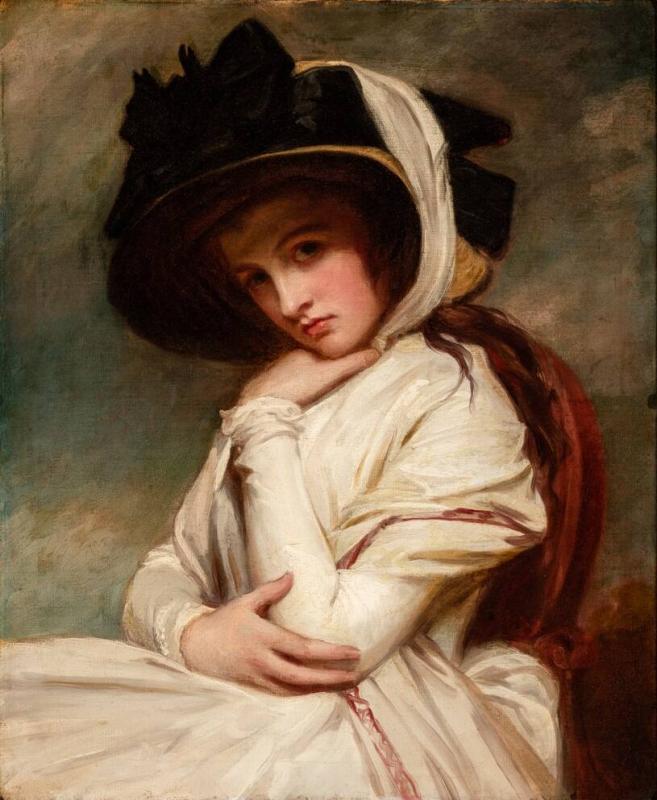
Emma Hamilton as a young woman c. 1782, by George Romney

I was reminded of the local story about Emma Hamilton’s supposed secret confinement somewhere in Southend, which I had read about in Karen Bowman’s book Essex Girls,[1] when I collected some records and memorabilia of Eton House School last month.  The school used to occupy the house called Southchurch Lawn on the road from Thorpe Bay to Great Wakering, which is where it is claimed Emma’s confinement took place.  Apparently, a ship’s surgeon called Seacole was in attendance, and he was persuaded to act as the father at the christening.  Also in attendance, it was said, was a gentleman ‘with an eye patch and an empty sleeve to his jacket’.

Baptisms of Edwin Horatio Hamilton Seacole and Elizabeth Caroline Lind Seacole

Extract from the Prittlewell baptism register, including entries (at the bottom) for Edwin Horatio Hamilton Seacole and Elizabeth Caroline Lind Seacole, September 18th 1803 (D/P 183/1/37)

Looking at the register to verify the entry myself, I found a baptism that took place on 18th September 1803 for two children, a boy christened Edwin Horatio Hamilton Seacole followed by a girl christened Elizabeth Caroline Lind Seacole, the son and daughter of a Thomas and Anne Seacole.  If these were the secret children of Emma Hamilton, and the name of the boy obviously suggests that they might have been, it looks as though she might have had twins.

At the time, Emma would most likely have been staying at the Royal Terrace at Southend, which was in the parish of Prittlewell, as she did on occasion apparently to facilitate liaison with Nelson whenever his ship was moored at The Nore.  In 1805, Emma gave a ball in Nelson’s honour at the assembly room, Southend, which was reported in the Chelmsford Chronicle, Friday August 2nd.  Of course, at the same time, possibly in 1803 or 1804, Caroline the Princess of Wales stayed at the ‘Royal Terrace’ which was named after her, and two years before, her daughter Princess Charlotte stayed for three months at Southchurch Lawn in 1801 for health reasons.

The boy, however, is even more interesting for his connection to another remarkable woman.  Later, he went to Jamaica and married a Jamaican woman of mixed race, Mary Jane Grant, who was to become the celebrated ‘black nurse’ of the Crimean War, Mary Seacole, voted the ‘greatest black Briton’ in a poll in 2004 as reported by BBC News.[2]  ‘Mother Seacole’, as she was affectionately known to many soldiers at the time, ran the ‘British Hotel’ at Spring Hill near Balaclava, which she established in March 1855 to provide what she herself described in her autobiography[3] as ‘a mess-table and comfortable quarters for sick and convalescent officers’.  She also helped wounded soldiers on the battlefield and witnessed the fall of Sevastopol.

The only known photograph of Mary Seacole, taken for a carte de visite by Maull & Company in London (c. 1873)

Later, in her will, she claimed that her husband was Nelson’s ‘godson’ who gave him a diamond ring which Mary kept until the end of her life, even though she fell on hard times after the Crimea, and bequeathed to one of her supporters, Count Gleichen.[4]  In which case, one wonders whether Nelson also attended the christening at St Mary’s himself.

At the time, Mary Seacole’s celebrity rivalled Florence Nightingale’s but she soon fell into obscurity, that is, until recently.  Although many have pointed out that she was never a ‘nurse’ in the sense that Florence Nightingale undoubtedly was, members from The Royal College of Nursing attended the dedication in July 2014 of the site in front of St Thomas’s Hospital where a memorial statue is to be erected to her, due for completion this summer (2015).

The register will be on display in the ERO Searchroom throughout August.

[1] Bowman, Karen (2010). Essex girls. Stroud: Amberley Publishing.

[3] The wonderful adventures of Mrs Seacole in many lands, which has since become a Penguin Classic.

[4] Sara Salih, the editor of the Penguin Classics edition of Mary Seacole’s autobiography, as well as citing the will in her introduction, also refers to surviving records for her marriage to Edwin Seacole in Jamaica and the entry for Edwin Seacole’s baptism in the this register.

Boston trip: another document is coming with us!

Following yesterday’s post we are pleased to be able to share the news that we have got further permission to be able to bring an original parish register with us on our trip to Boston in August 2015.

D/P 192/1/1 is the first parish register of Saffron Walden, with baptism, marriage and burial entries dating from 1558-1630, and therefore contains entries for a number of early American settlers and their families.

Map of Saffron Walden, 1758, by Edward John Eyre (D/B2 MAN7/3

Map of Saffron Walden, 1758, by Edward John Eyre (D/B2 MAN7/3

Several early settlers have been traced to Saffron Walden, such as Samuel Bass who moved to Roxbury, Massachusetts, in 1633, Thomas Cornell who went to Boston, Massachusetts in 1638, and Nicholas Desborough, who by 1637 was in Hartford, Connecticut.

The register is a beautiful early-modern book, long and thin, constructed of wooden boards with a soft leather cover.

The register will be on display with two original wills at our events in Boston, details of which are here.

IMG_7310

The first parish register of Saffron Walden – you can see its wooden covers just poking through the leather in the top left corner

IMG_7313

Soft leather wraps around the wooden covers of the book

IMG_7318

A glimpse inside the register